The automotive industry is in the middle of one of the most important transitions in its history. For more than a century, automakers competed mainly through mechanical engineering, manufacturing scale, durability, fuel efficiency, and design. Today, that competition has not disappeared, but it has been joined by a new and increasingly decisive force: software.
This shift is not cosmetic. It is changing how vehicles are designed, how they are sold, how they are updated, how they are experienced by drivers, and how brands build long-term value. In the past, a car was largely a finished product at the moment it left the factory. In the current era, a vehicle is increasingly becoming a digital platform that can evolve after purchase. That change is redefining the industry from the inside out.
At RulerHub, our view is that software is not simply improving the automotive sector. It is reorganizing it. It is changing the balance of power between manufacturers, suppliers, technology companies, and consumers. It is also forcing the industry to rethink what “quality” and “innovation” actually mean in a world where a car can be upgraded, patched, personalized, and expanded over time.
The car is no longer just hardware
The traditional automotive model was built around a physical product cycle. A vehicle was engineered, tested, manufactured, shipped, and sold. After that, the relationship between brand and customer was mostly limited to servicing, repairs, and future purchases.
Software breaks that model.
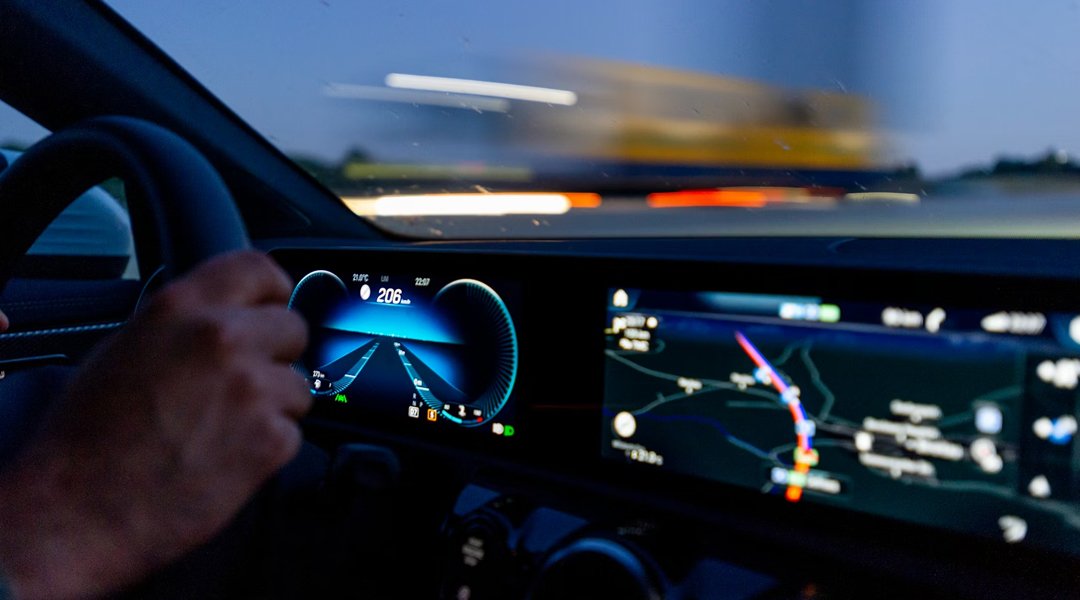
A modern vehicle now contains dozens, sometimes hundreds, of electronic control units, operating systems, sensors, communication layers, and interface modules. These systems manage everything from infotainment and navigation to braking assistance, battery management, climate control, and driver monitoring. As software takes over more of these functions, the car begins to behave less like a static machine and more like a connected computing environment.
That matters because once a vehicle becomes software-driven, the ownership experience no longer ends at the showroom. It continues through updates, feature rollouts, service alerts, user interface improvements, performance refinements, and sometimes entirely new functions delivered after delivery. In this new environment, the product is never truly finished.
Why software has become the new competitive edge
Software has become important in the automotive sector for one simple reason: it changes the economics of value creation. Mechanical innovation is still essential, but software creates a different kind of advantage. It allows automakers to improve products faster, introduce new revenue models, personalize features, and strengthen customer relationships over time.
That is a powerful shift.
A company that once sold a car once can now maintain a digital relationship with the owner for years. It can collect feedback, issue updates, add services, and create more touchpoints throughout the vehicle’s life cycle. This is one reason the automotive industry is increasingly borrowing language and strategy from the technology sector.
The new battleground is no longer just horsepower, torque, or body design. It is also user experience, system architecture, data strategy, update capability, cybersecurity, and integration speed. In practical terms, this means software is now part of the brand promise. If the software is clumsy, unstable, or slow to improve, the vehicle can feel outdated even if the hardware is still strong.
The rise of the software-defined vehicle
One of the clearest signs of the industry’s evolution is the emergence of the software-defined vehicle. This concept describes a vehicle whose functionality is increasingly controlled and enhanced by software rather than being permanently fixed at the time of production.
That does not mean hardware is becoming unimportant. Far from it. It means hardware is becoming a foundation for software experiences rather than the only source of differentiation. The same physical platform can now support different trims, features, functions, and user experiences depending on how the software is configured and updated.
This has several consequences.
First, product development becomes more flexible. Manufacturers can launch a vehicle and continue refining it over time instead of waiting for a full redesign cycle.
Second, the ownership timeline changes. A car may improve in some ways after purchase, which alters what buyers expect from a brand.
Third, the business model expands. Instead of relying only on upfront sales, automakers can offer subscriptions, digital add-ons, performance unlocks, connected services, and feature packages.
That combination is redefining the vehicle itself. The car is no longer only transportation. It is becoming a mobile computing platform.
What this means for automakers
For automakers, the shift to software is both an opportunity and a warning.
The opportunity is obvious. Software can improve customer satisfaction, unlock recurring revenue, and make products more adaptable. It also allows manufacturers to respond more quickly to changing consumer expectations. A brand can fix issues, release enhancements, and add value after the sale. That is a major strategic advantage in a market where customer retention matters as much as initial sales.
The warning is equally important. Building great software is not the same as building great hardware. The two disciplines operate differently. Hardware development often moves in longer cycles with strict physical constraints. Software development requires faster iteration, frequent testing, continuous integration, and a different kind of organizational culture.
This is where many traditional automakers face difficulty. They are not starting from zero, but they are carrying legacy structures that were built for a different era. Supplier chains, engineering silos, approval processes, and product cycles can all slow down software progress. In a world where digital excellence is becoming central, that lag can become costly.
At RulerHub, we believe the most important question is not whether automakers should invest in software. They already must. The real question is whether they can transform themselves quickly enough to compete with companies that were born with a software-first mindset.

The role of technology companies in the auto industry
The software revolution in automotive is also blurring the line between car companies and tech companies. Technology firms are now deeply involved in operating systems, chip design, mapping, connectivity, cloud services, artificial intelligence, voice assistants, and autonomous driving support.
This creates a new kind of ecosystem. Automakers are no longer simply selling vehicles; they are assembling digital experiences from multiple layers of technology. That means partnerships matter more than ever.
But there is a catch. The more software depends on external ecosystems, the more strategic complexity grows. A vehicle’s value may now depend on the performance of third-party software, the reliability of cloud systems, or the compatibility of future updates. That introduces dependency risk, and it requires companies to think more carefully about control, openness, and long-term support.
The winners in this environment will not be the companies that try to do everything alone. They will be the ones that build flexible ecosystems while still maintaining clear product identity and strong system governance.
Consumers are changing too
The rise of software in vehicles is not only transforming manufacturing. It is also changing consumer behavior.
Buyers are becoming more aware that the car they purchase today may not be the same car they are driving in two or three years. Features can be added or removed. Interfaces can change. Performance can improve. Subscription models can appear. Connectivity can affect convenience, safety, and resale value.
This means consumers are no longer just buying a vehicle. They are buying into a software ecosystem.
That is a major shift in mindset. It raises new questions that did not matter as much before. How long will the software be supported? How often will updates be delivered? Will the user interface remain intuitive? Will safety-related systems improve over time or become obsolete? These are now part of the purchase decision.
As a result, trust has become more important. If software is buggy, insecure, or poorly maintained, the damage to brand reputation can be much larger than a minor mechanical flaw. In a software-defined market, digital reliability becomes a core measure of quality.
Risks and challenges cannot be ignored
Although the software transformation is powerful, it also introduces real risks.
Cybersecurity is one of the most obvious. The more connected a vehicle becomes, the more it must be protected from intrusion, manipulation, and data misuse. Software-defined cars create new attack surfaces, and automakers must treat cybersecurity as a design requirement, not a side concern.
Complexity is another challenge. A modern vehicle may depend on tightly integrated software stacks that must work across many systems at once. A small error in code can have widespread effects on usability, performance, or even safety. This raises the cost of testing, validation, and maintenance.
There is also the question of consumer backlash. Not every buyer welcomes subscriptions, locked features, or constant digital change. Some customers may feel that they are paying twice for the same car if basic functions are held behind software paywalls. Automakers need to balance monetization with fairness and clarity.
These challenges do not weaken the software argument. They make it more serious. Software is reshaping the automotive industry precisely because it brings both extraordinary opportunity and significant responsibility.
RulerHub’s conclusion
From the RulerHub perspective, software is redefining the automotive industry in a deeper way than most headlines suggest. It is not just improving convenience or adding digital features. It is changing how vehicles are conceived, how brands compete, and how value is delivered over time.
The car is becoming a living product rather than a fixed one. That shift favors companies that can combine engineering strength with digital agility. It rewards those that understand that customer experience does not end at delivery. And it penalizes those that still think of software as an accessory rather than a core capability.
The automotive companies that will lead the next decade are likely to be the ones that treat software as the operating system of the business, not just the operating system of the car.
That is why the answer to the question is clear: yes, software is reshaping and redefining the automotive industry. More importantly, it is redefining what the automotive industry must become.
FAQ
1. What does “software-defined vehicle” mean?
It refers to a vehicle whose functions, features, and performance are increasingly controlled by software and can be updated or enhanced after the car is sold.
2. Why is software now so important in cars?
Because it affects the driving experience, safety systems, connectivity, updates, personalization, and even the business model of the automaker.
3. Does software replace mechanical engineering?
No. Mechanical engineering is still essential, but software is becoming the layer that determines how the vehicle behaves, evolves, and interacts with users.
4. What is the biggest advantage of software in cars?
The biggest advantage is flexibility. Software allows automakers to improve vehicles after sale, launch new features, and build stronger long-term customer relationships.
5. What is the biggest risk?
Cybersecurity, software complexity, and poor customer trust are the major risks. A connected car must be secure, stable, and well supported.
6. Will all future cars be software-defined?
Most likely, yes, to some degree. Even if the level of software integration varies, the trend is clearly moving toward more connected, more updateable, and more intelligent vehicles.
More Articles for the Topic
7 Automotive Technologies Poised to Revolutionize the Market
The Real Trends in Autonomous Driving
How the Public Benefits from Autonomous Driving Technologies
Autonomous Driving: Assessing Trustworthiness in the Age of Smart Mobility
If BMW, Mercedes-Benz and Audi Fall Behind in Self-Driving Tech — What Happens Next
Why Tesla Embraced Pure Vision for Self‑Driving Supremacy
Maybe This is Elon Musk’s Profound Vision for the Future of Self-Driving Cars
The Rational Foundations of Self-Driving Technology: A Comprehensive Analysis