Executive summary
The common assumption that humanoid robots are merely an incremental, higher-spec version of industrial robots conflates two fundamentally different technological trajectories. Industrial robots are mature, task-specific execution systems optimized for precision and repeatability; humanoid robots are emergent, generalized embodied intelligence platforms whose primary barriers lie in system-level software, multimodal perception, and whole-body electromechanical integration. This analysis breaks down those differences across hardware, software, and industrial-chain dimensions.
Industrial robots — deterministic systems grounded in precision hardware
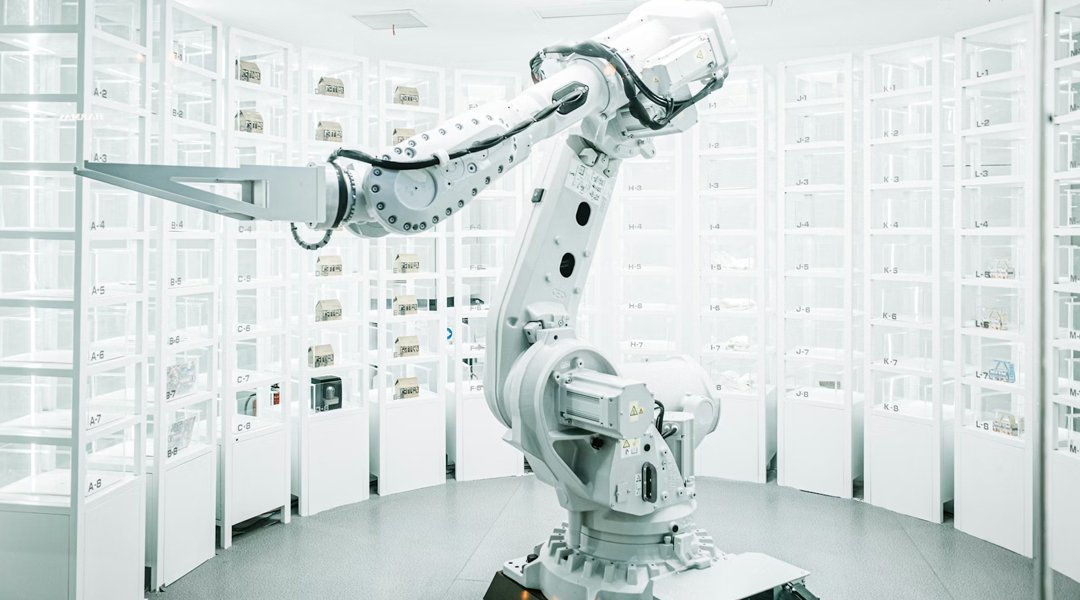
Industrial robots function as specialized execution terminals within structured manufacturing environments. Their engineering priorities and industrial-chain barriers cluster into two technical vectors:
1. Precision hardware and motion control.
The value proposition centers on high-accuracy mechanical transmission (e.g., RV and harmonic reducers), high-performance servos, and deterministic controllers. Thresholds such as ±0.01 mm repeatability drive component tolerances and controller design toward the physical limits of current electromechanical technology. Competitive advantage is captured primarily through refined mechanical design, manufacturing process control, and closed-loop motion algorithms.
2. Scenario-specific integration and predictable economics.
Deployment assumes highly structured factory cells; systems perform deterministic, repetitive tasks (welding, pick-and-place, PCB assembly). The ecosystem is stratified: upstream suppliers of core components, midstream robot OEMs, and downstream system integrators and integrative software. Business models are predominately B2B with quantifiable ROI horizons, enabling scale economies and cost optimization through volume production and long product lifecycles.
In short, industrial robotics is a hardware-centric discipline where barrier reduction proceeds by improvements in precision manufacturing, supply-chain localization, and cost scaling.
Humanoid robots — system-level software and embodied intelligence as the bottleneck
Humanoid robots represent a different engineering paradigm in which the system’s intelligence, adaptability, and safety in unstructured environments dominate the challenge set.
1. Dense mechatronics with high unit BOM.
A single humanoid platform requires dozens of miniaturized, high-torque-density actuators and distributed sensing. Per-axis costs are order-of-thousands of RMB, driving an elevated BOM even with partial localization of components. However, raw hardware cost is only part of the story.
2. Algorithmic and integration complexity.
The principal barriers are system-level: dynamic balance and bipedal gait control, real-time sensor fusion (vision, tactile, force), and task decomposition guided by large foundational models. These capabilities require tight co-design across controls, perception, and high-capacity compute stacks. Robustness in unstructured, variable environments depends on algorithmic generalization, safety-aware motion planning, and deterministic fail-safe behaviors.
3. Nascent industrial ecosystem and business model uncertainty.
The humanoid value chain remains immature: many vendors pursue vertically integrated, full-stack development with limited standardization. Current deployments are largely pilot projects in industrial scenarios that are tedious, hazardous, or hard to automate with traditional robots. Consumer-facing applications remain at proof-of-concept stages and sustainable monetization models are still emerging. The strategic advantage for humanoid platforms accrues from advances in AI generalization, system integration efficiency, and cost control at scale.
Note: 2026 is referenced as an inflection year for mass deliveries (projected shipments ~120,000 units), with the China accounting for a majority of that volume.
Comparative synthesis — incommensurable paradigms
Two parallel but incommensurate paradigms emerge:
- Industrial robots = specialized precision tools. Optimization targets are mechanical accuracy, deterministic controllers, and low-cost scaling for fixed tasks in constrained environments. Barriers are largely physical and supply-chain oriented.
- Humanoid robots = general-purpose embodied platforms. Optimization targets are algorithmic robustness, multimodal perception, and integrated electromechanical control for open, unstructured environments. Barriers are primarily in software, systems engineering, and interdisciplinary R&D.
These are not points on a single linear evolution but rather distinct technological routes. Firms rooted in motion control and manufacturing process expertise will continue to advance industrial robotics. Conversely, breakthroughs in humanoid robotics will depend on interdisciplinary integration across artificial intelligence, cognitive modeling, mechatronics, and systems safety engineering.
Implications for industry stakeholders
- Component suppliers: Should differentiate between high-precision, volume-oriented component roadmaps (industrial robotics) and low-volume, high-performance actuator and sensor modules (humanoids).
- OEMs and integrators: Industrial OEMs can optimize yield and total cost of ownership; humanoid developers must invest in full-stack validation, simulation, and edge compute architectures.
- Investors and policymakers: Investment timelines, risk profiles, and policy needs differ—industrial robotics yields predictable ROI from automation investments; humanoid robotics demands longer-term capital for R&D, safety standardization, and regulatory frameworks.
Treating humanoid robots as a simple extension of industrial robots obscures the substantive technical and industrial-chain differences. Industrial robotics advances through incremental hardware and integration efficiencies; humanoid robotics demands breakthroughs in algorithmic generalization and system co-design. Recognizing these distinct trajectories clarifies where to allocate engineering resources, capital, and policy support to accelerate safe, scalable deployment across both domains.
More Articles for This Topic
Collaborative Robots: The Cornerstone of Tomorrow’s Manufacturing
The Era of Intelligent Agents: AI’s Shift from “Tool” to “Partner”
Humanoid Robotics Face-Off: Assessing Tesla Optimus and Its Top Competitors
Humans and Machines Unite: Embracing Industry 5.0 and Seizing Its Promise
From Fiction to Reality: Could “I, Robot” Unfold in Our AI-Driven Future?
Connected Intelligence: How Smart IoT Technologies Underpin the Future of Robotics
Wiring Tomorrow’s Workforce: Integrating Smart IoT, 5G, Cloud, and AI to Forge a Robust Robot World