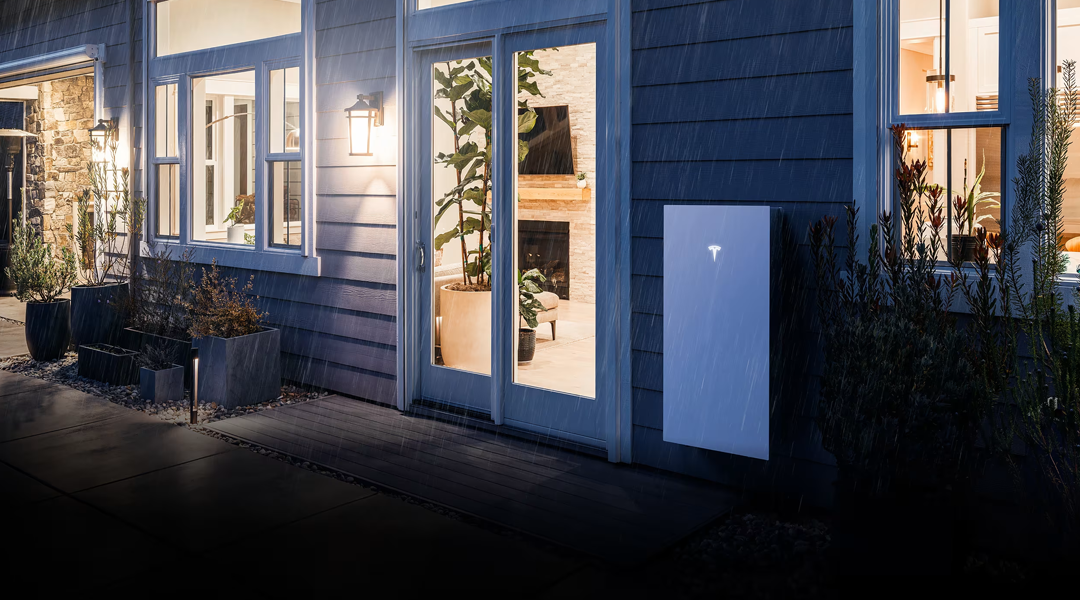
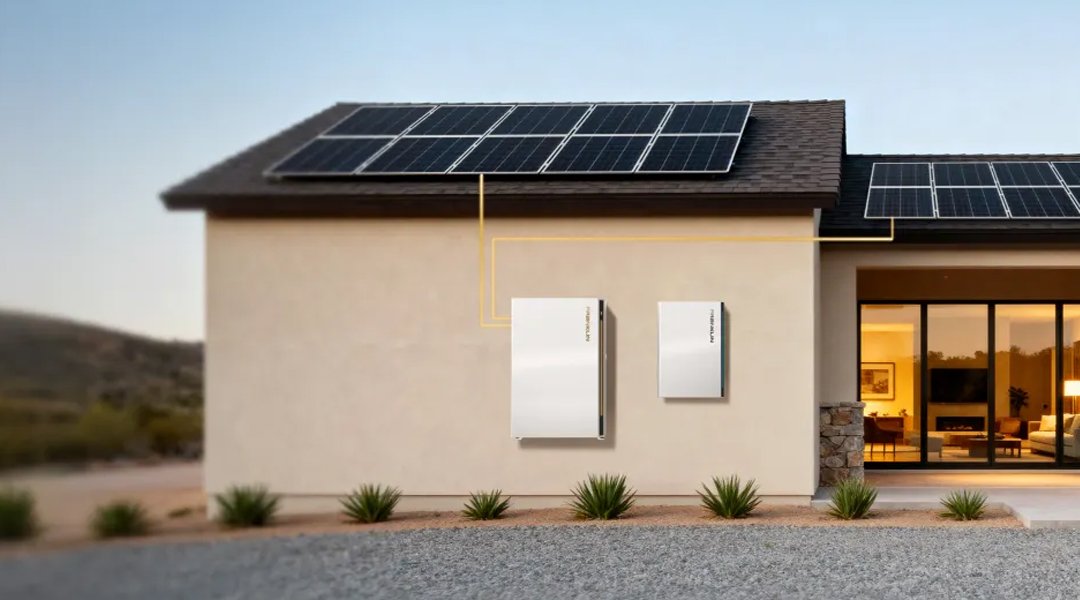
Home battery systems have moved from niche gadgets to central pieces of resilient, money-saving home energy systems. Below is a side-by-side comparison of Tesla’s Powerwall (Powerwall 3 specs) and FranklinWH’s aPower S, and a practical buying guide so you can pick the right system for your home.
Why these factors matter — the key selection checklist
When choosing a reliable home energy storage product, focus first on these core factors:
- Usable energy capacity (kWh) — determines how long the battery can run your house under backup or self-consumption scenarios. Larger capacity = longer autonomy; capacity should match your outage profile and daily consumption.
- Power (continuous & peak kW) — how much load the system can supply at once ( HVAC, electric oven, EV charger startup). Continuous and peak ratings indicate whether a single unit can run your whole home or only essentials.
- Charge/discharge rate & round-trip efficiency (RTE) — faster charge lets you capture more solar production in short windows; higher RTE means less energy lost cycling the battery (better economics). FranklinWH publishes RTE; Tesla emphasizes inverter efficiency on its spec sheet.
- Integrated inverter vs separate inverter — integrated all-in-one units simplify installation and reduce parts/failure points; separate inverters can offer flexibility for mixed systems. Both products present integrated designs.
- Scalability & system architecture — how many units you can stack, whether the system supports multiple solar arrays, and compatibility with future upgrades.
- Warranty & warranted throughput — warranty term and throughput limits (MWh) determine long-term value and replacement risk. FranklinWH emphasizes a 15-year/throughput warranty; Tesla offers a 10-year warranty.
- Environmental rating & durability — operating temperature range, IP/weather/flood resistance, seismic and impact testing matter for outdoor installations.
- Safety features & certifications — UL/EMI/other certifications, BMS quality, thermal management and overload protections. Manufacturer test results and certifications should be verified.
- Smart features, app & grid services (VPP, export/earnings) — systems that participate in virtual power plants (VPP) or can export to the grid may provide additional revenue or emergency support. Both vendors highlight smart energy management and VPP/earnings potential.
- Installer network & service/parts availability — local certified installers, support phone/email, and a clear path to service are essential; check manufacturer installer programs and local partners.
Head-to-head — Tesla Powerwall (Powerwall 3) vs FranklinWH aPower S
| Feature / metric | Tesla Powerwall (Powerwall 3) — manufacturer specs | FranklinWH aPower S — manufacturer specs |
|---|---|---|
| Usable energy capacity | 13.5 kWh (Powerwall 3 baseline). Additional expansion options available. | 15 kWh per unit; scalable up to 15 units per controller (225 kWh). |
| Continuous power (on-grid / backup) | Up to 11.5 kW continuous (Powerwall 3). Tesla lists other model variants with lower continuous ratings (e.g., 7.6 kW / 5 kW depending on configuration). | FranklinWH emphasizes UPS-level stable output and strong load-handling; explicit continuous kW not given on overview page but charge input is up to 8 kW; aPower S targets whole-home backup. (Recommend asking installer for exact continuous/peak kW for your configuration.) |
| Peak / motor start capability | Listed motor start capability (e.g., 185 LRA motor start) and peak outputs for different variants. | Described as UPS-level quality and compatible with high-draw appliances; detailed peak kW not listed on the overview. |
| Integrated inverter | Yes — integrated inverter + system controller; solar inputs (6 MPPTs on Powerwall 3). | Yes — integrates inverter and battery in one cabinet with multiple solar input channels and proprietary MPPT algorithms. |
| Round-trip efficiency (RTE) | Tesla lists solar-to-grid inverter efficiency (97.5%) on spec sheet; explicit battery RTE not shown on this page. | States up to 90.5% RTE (Solar→Battery→Home/Grid) on product page. |
| Charging speed | Can charge from solar or grid; Tesla supports Smart charging and Storm Watch auto-charge functions. Exact kW charge rate varies by model/config. | Up to 8 kW charging — the page claims fully charged in ~2 hours at max charge. |
| Warranty / throughput | 10-year warranty (manufacturer). | 15-year warranty or 60 MWh warranted throughput (manufacturer). |
| Environmental & IP rating | Operating −4°F to 122°F; flood resistant up to 2′ and dust/water resistance noted. | IP67 rating; operating −4°F to 131°F; extensive environmental and impact testing described. |
| Smart features / app / VPP | Tesla App energy features, Storm Watch, Powershare (EV sharing), & grid export/earning references. | FranklinWH app, Global MPPT algorithms, support for VPP programs & energy trading; emphasizes earnings potential. |
| Noise & aesthetics | Wall/floor mountable, compact; Tesla product design focus. Noise not highlighted (typical for integrated systems). | Quiet as low as 30 dBA, LED strip, aluminium alloy housing and automotive-grade coating. |
| Who it suits (quick take) | Homeowners wanting a widely deployed, integrated solution with high power for EV + whole-home backup and strong installer network. | Homeowners who need larger per-unit capacity and exceptional environmental ruggedness, high scalability, and a longer warranty/throughput commitment. |
Notes: Tesla publishes detailed continuous and peak ratings for its variants and calls out Storm Watch and Heat Mode for cold climates; FranklinWH focuses on higher per-unit capacity (15 kWh), fast charging (8 kW), IP67 durability, a longer warranty/throughput, and high RTE claims. Where FranklinWH omits a specific continuous kW in the overview, ask their installer for the certified continuous/peak power figures for your region and configuration.
Practical buying guide — step-by-step (how to choose for your home)
- Calculate your needs first (load & duration).
- Create a simple load estimate: list essential circuits (fridge, lights, Wi-Fi, heater/AC if required) and find their combined kW draw. Match that to the battery’s continuous kW. Use the battery’s kWh to determine how many hours of backup you’d get. (Example: a 13.5 kWh Powerwall typically gives several hours for essentials or shorter whole-home support depending on load; a 15 kWh aPower S gives similar but slightly larger single-unit capacity).
- Decide between whole-home vs critical-loads backup.
- If you want whole-home backup including HVAC/EV charging, prioritize higher continuous/peak kW (Tesla Powerwall 3 lists 11.5 kW continuous). If you only need critical loads, smaller continuous ratings suffice—this opens more vendor options.
- Match the battery to your solar array & charging habits.
- Systems with multiple MPPT inputs (Tesla up to 6 MPPTs; FranklinWH supports many solar channels) make better use of complex roofs or multiple arrays. If you have a large solar array and want fast daytime charging, check charge-in limits (FranklinWH advertises up to 8 kW charge speed).
- Compare long-term durability and warranty math.
- Look beyond years to throughput (kWh delivered over warranty) and expected end-of-warranty capacity. FranklinWH lists a throughput warranty (60 MWh) and 15 years; Tesla uses a 10-year warranty — compute how many cycles and throughput you realistically expect.
- Verify environmental suitability for your site.
- If you live in flood zones, marine/coastal areas, or places with extreme temps, look for IP rating/flood resistance (FranklinWH: IP67; Tesla: flood resist up to 2′). Check cold-climate features (Tesla’s Heat Mode and Storm Watch).
- Ask about certified continuous & peak power for your configuration.
- Manufacturer overviews sometimes highlight concepts rather than certified kW. Get the installer to provide the exact continuous and peak kW for the model they’ll install. This avoids surprises (e.g., whether your heat pump or EV charger can run during backup).
- Check smart features & monetization paths.
- If VPP participation or export tariffs matter, confirm whether your system participates in programs, how earnings are calculated, and any control limitations during events. Both Tesla and FranklinWH reference VPP/earnings capability.
- Get multiple installer quotes and a local site assessment.
- Compare total installed cost (battery + inverter + labor + permits), incentives/credits, and estimated payback. Ask each installer for a modeled outage scenario using your real usage.
- Factor in service & spare parts availability.
- Large consumer brands may have wider service networks (Tesla) while specialized OEMs may offer stronger warranties/throughput (FranklinWH). Confirm local support and response time.
Quick verdict / recommendations
- Best for high-power whole-home + established brand/install base: Tesla Powerwall (Powerwall 3) — strong continuous power (11.5 kW), integrated inverter, and a large installer network; good options for EV owners and people who want whole-home backup.
- Best for per-unit capacity, durability, and long warranty: FranklinWH aPower S — larger 15 kWh per unit, IP67 ruggedness, 15-year/60 MWh warranty and high RTE claims; excellent for customers who need high scalability and environmental robustness.
More articles for the topic
Is Tesla Powerwall the Best Home Battery?
Anker SOLIX F3800 Plus vs EcoFlow DELTA Pro Ultra — Deep Technical & Practical Analyses
Anker SOLIX Showdown: F3800 Plus, F3000 and F2000 Compared for Home Backup
Anker SOLIX F3800 Plus: Whole-Home Backup or Overpriced Power Station?
Deep analyses of V2H, V2G, and the future grid-service landscape
All articles of Energy Brand Focus articles, please click here