Over the last decade electrification and vehicle intelligence have reshaped the global automotive industry. In this once-in-a-century transition, Tesla emerged as the disruptive architect of the software-first electric vehicle (EV) paradigm, while Toyota remained the steady guardian of scale, process excellence, and technological diversification. Their rivalry is more than a corporate contest — it’s a microcosm of two distinct strategic paths the industry can follow. This article uses the latest available data to analyze each company’s core competitiveness and to sketch the competitive landscape ahead.
I. Tesla — a moat built on software and ecosystem scale
Tesla’s advantage has shifted beyond early electrification leadership to a competitive moat centered on software, data, and vertically integrated hardware.
Technical strengths
- Electronic architecture and vertical integration. Tesla’s centralized electrical/electronic architecture (EEA), in-house FSD silicon, and large-scale die-casting streamline manufacturing and reduce bill-of-materials cost, enabling tighter hardware–software integration and faster iteration.
- Closed-loop software and driving data. By 2024 Tesla’s Full Self-Driving (FSD) program had amassed extraordinary real-world mileage, providing rich training data for its neural networks. The V12 release’s move toward end-to-end architectures marked a critical step toward more capable on-road autonomy.
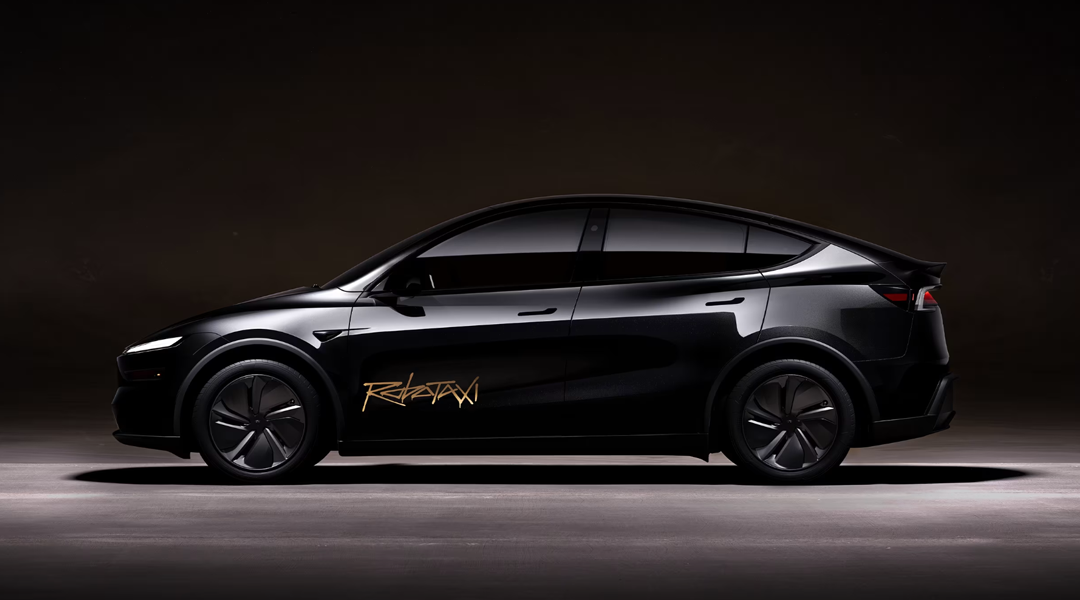
Analysts have noted that Tesla’s long-term value is increasingly tied to software monetization (subscriptions, Robotaxi services) in addition to vehicle hardware profits.
Market and ecosystem advantages
- Rapid growth and market capitalization. Tesla scaled global deliveries from roughly 22,000 vehicles in 2013 to 1.81 million in 2023 and exceeded 2 million in 2024, while maintaining a market capitalization that reflected strong investor confidence in its future monetization paths.
- Charging and energy ecosystem. Tesla’s Supercharger network — and the adoption of the North American Charging Standard (NACS) by many OEMs — have elevated the company from vehicle OEM to influential infrastructure provider, reinforcing its broader ecosystem advantage.
II. Toyota — scale, diversification, and pragmatic innovation
Toyota’s strength derives from unmatched manufacturing scale, supply-chain resilience, and a multi-path technological strategy that balances near-term commercial realities with long-term bets.
Technical strengths
- Multi-path energy strategy. Toyota’s leadership in hybrid electric vehicles (HEVs), with cumulative global sales exceeding 25 million, provides a durable revenue and technology base. Toyota is also progressing toward mass production of all-solid-state batteries around 2027–2028 and continues investment in hydrogen fuel-cell technologies — a portfolio approach that reduces technological and market risk.
- Lean manufacturing and cost discipline. The Toyota Production System (TPS) remains a decisive competitive advantage: superior quality, inventory efficiency, and cost control underpin durable profitability even during technology transitions.
Market advantages
- Scale and global footprint. In fiscal 2023 (April 2023–March 2024) the Toyota Group (including Daihatsu and Hino) sold about 11 million vehicles worldwide, and calendar-year 2024 sales remained above 10 million — evidence of broad market penetration and resilience.
- Comprehensive product coverage. From entry-level models to Lexus luxury vehicles, and from internal-combustion to hybrids and battery electric vehicles (BEVs), Toyota’s full product line and global supply footprint make it exceptionally resilient to regional or segment shocks.

III. Coopetition and the future landscape: divergence, convergence, or both?
The Tesla–Toyota dynamic encapsulates a larger industry debate: rapid, software-centric disruption versus incremental, hardware-and-manufacturing-led innovation.
- Different strategic logics. Tesla pursues a software-defined vision of mobility — aiming for autonomous fleets, subscription monetization, and energy services. Toyota emphasizes evolutionary change: applying rigorous manufacturing, multi-technology energy strategy, and incremental electrification at massive scale.
- Analyst perspectives. Market observers suggest the picture is one of divergence rather than a simple head-to-head winner/loser outcome. Tesla’s software and AI lead appears durable in the near term; Toyota’s strengths in batteries, hybrids, and cost-efficient mass production keep it competitive across the broader market.
Paths to greater interaction
Rather than pure antagonists, the two firms may increasingly occupy a mixed relationship of competition and selective cooperation:
- Market segmentation. Tesla is likely to remain dominant in the high-end smart-EV and software-monetization segments, while Toyota will continue to serve the vast mass market via diversified platforms and energy chemistries.
- Cross-learning. Toyota can accelerate software development cadence and experiment with more direct sales/support models; Tesla could learn from Toyota’s production scale and supply-chain discipline.
- Areas for cooperation. The growing adoption of shared standards (for example, charging) opens possibilities for practical collaboration — from infrastructure interoperability to targeted technology licensing or joint pilots in autonomy, battery manufacturing, or hydrogen systems.
Different routes
By 2025 the competitive relationship between Tesla and Toyota is clearer: they are not identical substitutes but parallel forces charting different routes through the same transformation. Tesla resembles a software-driven technology platform — redefining user experience and monetization through data and services. Toyota represents the archetypal industrial champion — matching global demand with manufacturing excellence and technology diversification. Both strategies are valid and simultaneously push the industry forward. The ultimate advantage will likely go to the company (or companies) that more quickly and effectively assimilate the other’s strengths.
More articles for the topic
How Code Is Breaching the Century-Old Walls of the Auto Industry
Ford Ranger vs Ford F-150 vs Ford Super Duty: Deep Analyses
The Next Charge: How EV Battery Technologies Are Evolving for Range, Speed, and Sustainability