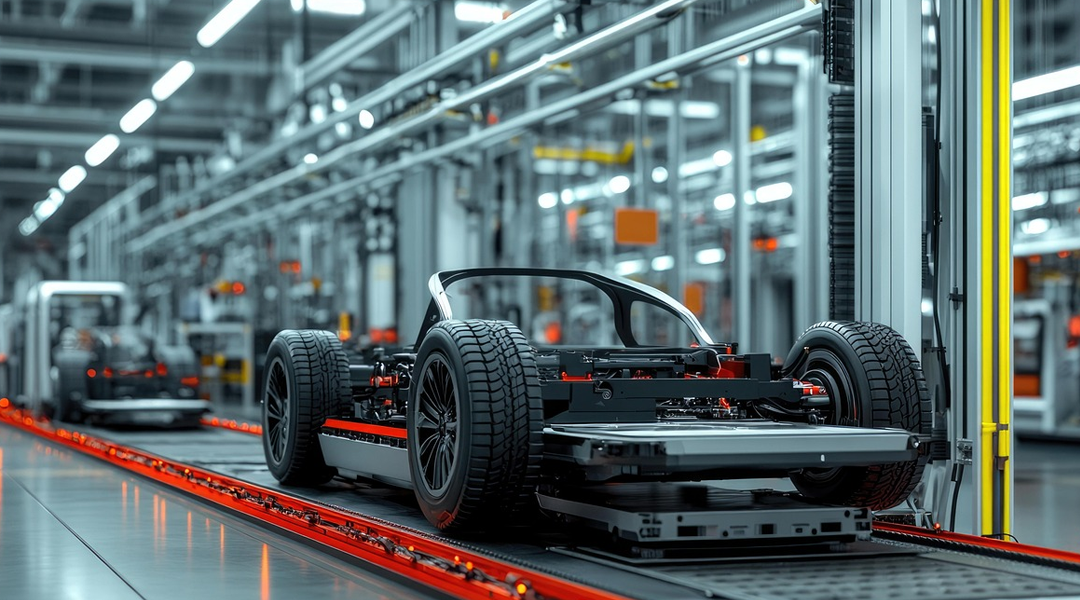

The conversation around electric vehicle batteries has changed. A few years ago, most discussions revolved around one question: how far can the car go on a single charge? That question still matters, but it no longer tells the whole story. Today, battery technology is being judged by a far more demanding set of expectations. Drivers want longer range, faster charging, better safety, lower costs, and less environmental impact. Manufacturers, meanwhile, want battery systems that can scale, survive supply shocks, and fit into a fast-moving industrial landscape.
This is why the next phase of EV battery development cannot be understood as a simple competition between chemistries. It is becoming a broader engineering and economic redesign of the entire battery ecosystem. The real innovation is no longer just inside the cell. It is in how the cell is packaged, cooled, charged, reused, recycled, and integrated into the wider energy system.
At RulerHub, the most important point is this: the future of EV batteries will not be decided by a single breakthrough. It will be decided by how well the industry combines chemistry, software, manufacturing, charging infrastructure, and circular economics into one coherent system.
Range is becoming easier to advertise, but harder to engineer well
Range remains the headline number that most buyers notice first. It is also one of the easiest metrics to misunderstand. A large battery can boost range, but battery size alone does not make an EV better. Bigger packs add weight, increase material use, raise cost, and can make charging slower unless the rest of the system is designed to match.
That is why the industry has been shifting toward a more balanced approach. Instead of merely making batteries larger, manufacturers are trying to make them denser, lighter, more efficient, and more integrated with the vehicle platform. In practical terms, this means improving how much energy can be stored per kilogram while reducing the losses that come from heat, resistance, and poor thermal control.
This matters because range is not just about chemistry. It is also about aerodynamics, motor efficiency, software calibration, regenerative braking, route planning, and temperature management. A battery pack that looks impressive on paper may still underperform in real-world conditions if the vehicle is not built around it intelligently. The next generation of EVs will win not because they carry the most cells, but because they use energy more intelligently.
That is a more mature definition of progress, and it is the right one.
Faster charging is the new battleground
If range was once the main anxiety point for EV buyers, charging speed is now moving into that role. People do not merely want enough range for daily use. They want confidence that charging will fit naturally into their routines, whether that means a long trip, a work break, or a short stop on the way home.
This has made charging speed one of the most visible benchmarks in the EV market. But here too, the story is deeper than the marketing language. Faster charging is not simply a matter of forcing more electricity into a battery. It depends on whether the battery can safely accept that power without accelerating degradation, raising temperatures too high, or causing long-term damage.
This is where battery design becomes crucial. Improved electrode materials, more sophisticated cooling systems, better battery management software, and more precise charging curves all play a role. A battery that supports fast charging without destroying its own lifespan is far more valuable than one that merely advertises a high peak charging rate.
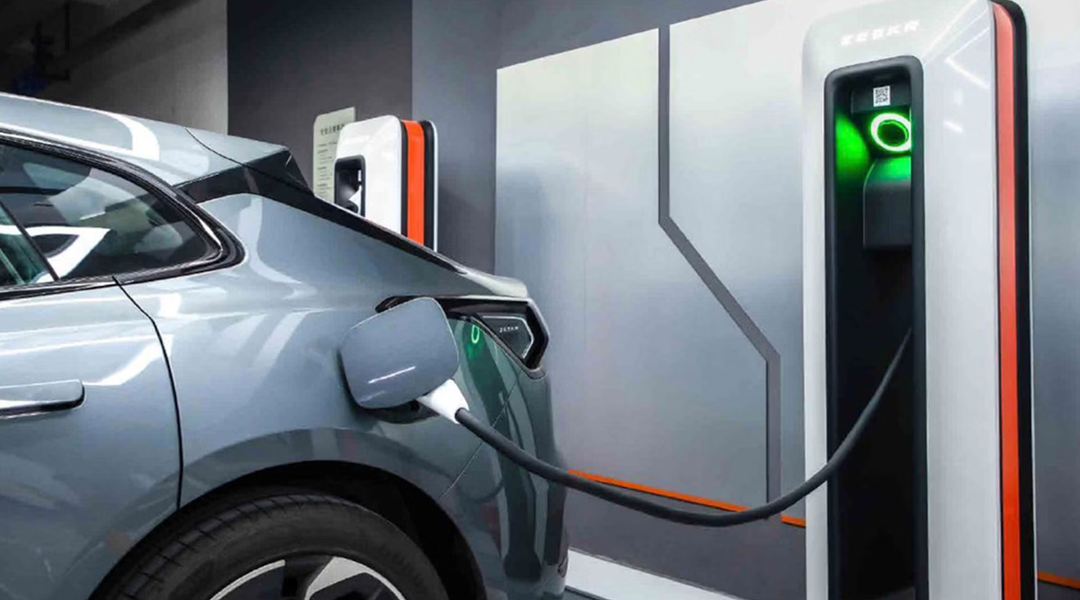
The wider infrastructure challenge is just as important. Fast-charging capability is only useful when drivers can actually access reliable chargers at scale. That means battery progress must be matched by public and private investment in charging networks, grid upgrades, and site planning. The battery may be ready for the future, but the charging ecosystem must be ready too.
RulerHub’s view is that charging speed is becoming a systems issue, not just an automotive one. The companies that understand this will build more sustainable competitive advantages than those chasing headline-grabbing numbers alone.
Chemistry is diversifying, and that is a strength
For a long time, battery conversations often implied that one chemistry would eventually dominate everything. The reality is turning out to be more interesting. Different battery chemistries are proving useful for different priorities, and that diversity is a sign of industrial maturity.
Lithium-ion remains the foundation of the EV market because it is familiar, commercially proven, and supported by a huge manufacturing base. But lithium-ion itself is not a single technology. It includes a range of material choices and performance profiles, each balancing energy density, cost, durability, and thermal behavior differently.
Some battery designs are better for long-range passenger vehicles. Others are more cost-efficient and more suitable for entry-level EVs or stationary energy storage. Some are being optimized for safety and cycle life. Others are being designed to tolerate more aggressive charging or support specialized commercial applications.
That diversification is healthy. It allows the market to match technology to use case rather than forcing every product into the same mold. It also helps reduce dependency on a single material strategy, which is increasingly important in a world where supply chains are under pressure and geopolitical risks can disrupt access to critical inputs.
One of the most important strategic shifts in the battery sector is that success is no longer defined by chemistry alone. It is defined by fit. The best battery is not always the most advanced one on a laboratory chart. It is the one that best matches the demands of the vehicle, the customer, and the surrounding energy infrastructure.
Sustainability now belongs in the design phase
Sustainability used to be treated as an end-of-life issue. The battery was built, used, and then eventually recycled if economics allowed it. That approach is no longer sufficient. The environmental credibility of EVs now depends on the full life cycle of the battery from mineral extraction to manufacturing to second-life use to recycling.
This is one of the biggest changes in how the industry thinks. A battery is no longer just a component. It is a resource pipeline. The materials in a battery retain value long after the first driving life ends, and a smart industry should be built to recover that value rather than discard it.
That means sustainability must start at the design stage. Batteries should be easier to disassemble, easier to diagnose, easier to repurpose, and easier to process at the end of their first life. Pack design, module standardization, and material traceability all matter more than they once did. The future battery is not merely efficient in use; it is recoverable by design.
This is also where second-life applications become strategically important. A battery that is no longer ideal for vehicle use may still have years of useful life in stationary storage, backup systems, or grid support. That extends the economic usefulness of the original materials and delays the need for new extraction. It also makes the overall energy system more efficient.
From RulerHub’s perspective, this is the point where sustainability stops being a marketing term and becomes an operational discipline. The most advanced battery companies will be the ones that treat recyclability, reuse, and material traceability as core product features rather than afterthoughts.
The real battery race is moving upstream and downstream
The public often sees the battery race as a battle of cell chemistries, but the more consequential competition is happening on both sides of the cell. Upstream, companies are fighting over access to lithium, nickel, graphite, manganese, and other critical materials. Downstream, they are competing on software, thermal management, charging behavior, residual value, and recycling infrastructure.
This broader competition changes how we should judge battery progress. A battery that performs well in a lab but depends on unstable material sourcing is not a complete solution. Likewise, a battery that can be made cheaply but degrades quickly or lacks a recovery pathway is not truly future-ready.
The industry increasingly needs a closed-loop mindset. That means building battery businesses that account for the whole value chain, not just the initial sale. It also means recognizing that some of the most important innovation opportunities may be in manufacturing efficiency, process design, and recovery systems rather than in the cell chemistry itself.
This is one reason why battery manufacturing has become such a strategic priority for governments and industrial planners. Whoever controls the capacity to refine materials, assemble cells, manage charging networks, and recycle old packs will have a major influence over the EV economy of the future.
Software is becoming as important as hardware
Another shift that deserves more attention is the growing role of software in battery performance. The battery pack may be physical hardware, but much of its usefulness depends on software that monitors temperature, controls charging, estimates range, balances cells, protects longevity, and coordinates with the rest of the vehicle.
This means that battery technology is becoming increasingly adaptive. Two vehicles with similar battery chemistry can deliver very different user experiences depending on how intelligently their battery management systems are programmed. One pack may charge too conservatively and waste time. Another may charge too aggressively and sacrifice lifespan. The difference lies in software strategy as much as in hardware design.
This trend is especially important because battery optimization is no longer only a matter of engineering efficiency. It is also a data problem. Battery systems generate enormous amounts of operational information, and that data can be used to improve vehicle performance, predict maintenance needs, and refine future pack designs. In this sense, the battery of the future is a learning system.
That is a powerful shift. It means the EV battery is no longer a passive container of energy. It is an active digital asset that can be monitored, tuned, and improved over time.
What the next generation of EV batteries will really prioritize
Looking ahead, the EV battery industry is likely to be shaped by five priorities at once.
First, energy density will continue to improve, but probably in steady steps rather than dramatic leaps. Second, charging speed will improve, but only if thermal safety and infrastructure keep pace. Third, cost reduction will remain essential, especially for mass-market vehicles and commercial fleets. Fourth, sustainability will increasingly be measured through circular design and recycling performance. Fifth, software will become a central layer of value creation, not just a support function.
These priorities are interconnected. A battery cannot truly be considered advanced if it is fast but fragile, cheap but unsustainable, or efficient but difficult to recycle. The market is moving toward a more holistic definition of quality.
That is good news, because it pushes the industry toward more realistic innovation. It also means the most successful companies will likely be those that can bridge multiple disciplines rather than excel in only one.
RulerHub’s perspective: the future belongs to battery ecosystems, not battery headlines
The biggest mistake in EV battery commentary is to treat the future as a race for one ultimate chemistry. That mindset is too simple for the world the industry is now entering. The real competition is about who can build the most resilient, scalable, and sustainable battery ecosystem.
That ecosystem includes mineral sourcing, cell manufacturing, thermal design, charging networks, grid coordination, software intelligence, repairability, second-life use, and recycling. The companies and countries that understand this broader picture will be in the strongest position over the long term.
In that sense, the next generation of EV batteries is not just about storing energy more efficiently. It is about designing an energy platform that is smarter, cleaner, and more circular from beginning to end.
The next charge is not only about going farther. It is about building a better system around the vehicle itself.
Articles of relative topics your may like:
Electric Champions Unveiled: A Deep Dive into Which EV Brands Will Reign Supreme
7 Automotive Technologies Poised to Revolutionize the Market
Innovating on the Assembly Line: AI’s Transformative Role in Automotive Development
Battery Monitoring Intelligence in the Automotive Industry
Elon Musk’s Master Blueprint for Tesla
As for in-depth insight articles about AI tech, please visit our AI Tech Category here.
As for in-depth insight articles about Auto Tech, please visit our Auto Tech Category here.
As for in-depth insight articles about Smart IoT, please visit our Smart IoT Category here.
As for in-depth insight articles about Energy, please visit our Energy Category here.
If you want to save time for high-quality reading, please visit our Editors’ Pick here.