Introduction: robotics is splitting into two distinct futures
The robotics industry is often described as if it were moving along a single path toward more capable machines. That idea sounds simple, but it misses what is really happening. In practice, robotics is separating into two different automation models. One is the mature world of industrial robots, built to maximize speed, repeatability, and precision in controlled environments. The other is the emerging world of humanoid robots, designed to function in human-built spaces that are less predictable, less structured, and far more complex.
This split is important because it changes how the industry should be understood. Humanoid robots are not simply a more advanced version of industrial robots. They are trying to solve a different problem. Industrial robots are optimized for production lines. Humanoid robots are being developed to operate in environments that were never designed for automation in the first place. That distinction affects everything: hardware architecture, software design, deployment economics, safety expectations, and supply chain formation.
For manufacturers, investors, and technology leaders, the key issue is not which robot is “better” in a general sense. The real issue is which automation model fits which business environment. Once that question is asked clearly, the difference between these two categories becomes much easier to understand.
Industrial robots were built for repeatability, not imitation
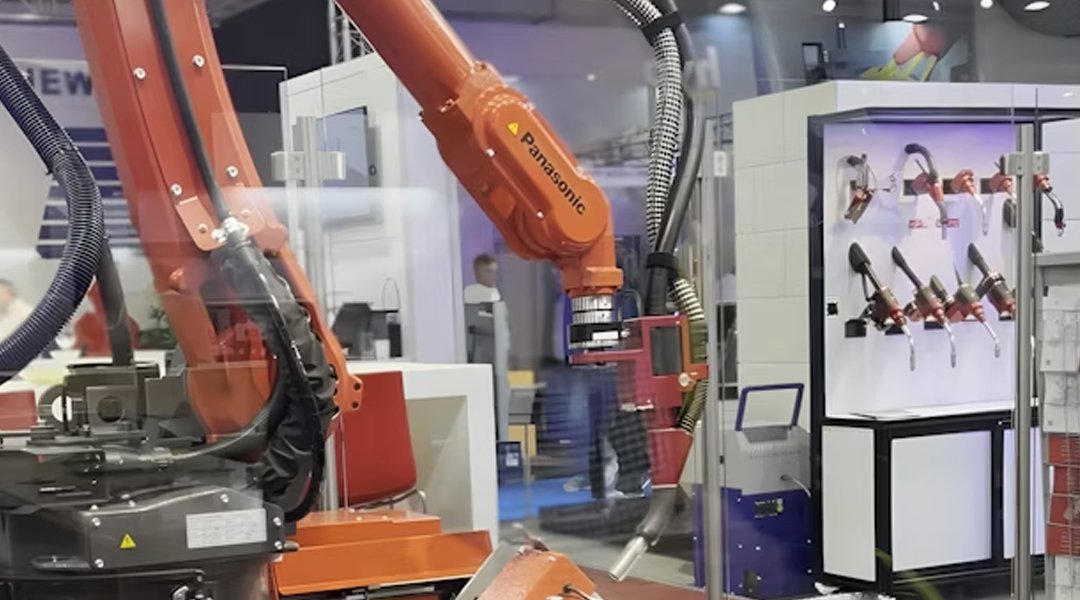
Industrial robots have become indispensable because they solve a very specific problem extremely well. They are designed for repetitive, high-precision tasks in stable environments. A robot arm on a factory floor does not need to walk, improvise, or interpret human behavior. It needs to weld, pick, place, assemble, paint, or inspect with consistency and speed.
That is why industrial robots work so well in structured production systems. The environment can be engineered around the machine. Parts can be positioned in consistent locations. Tasks can be sequenced in advance. Safety barriers, conveyors, fixtures, and software can all be designed to support deterministic performance. In this setting, the value of the robot comes from reliability and throughput.
This is one reason industrial robotics has remained such a strong market for so long. It is not chasing a vague idea of general intelligence. It is focused on measurable output. The machine does not need to understand the world in a human sense. It only needs to execute the task in the exact same way, over and over, with minimal error.
Humanoid robots are built for human environments
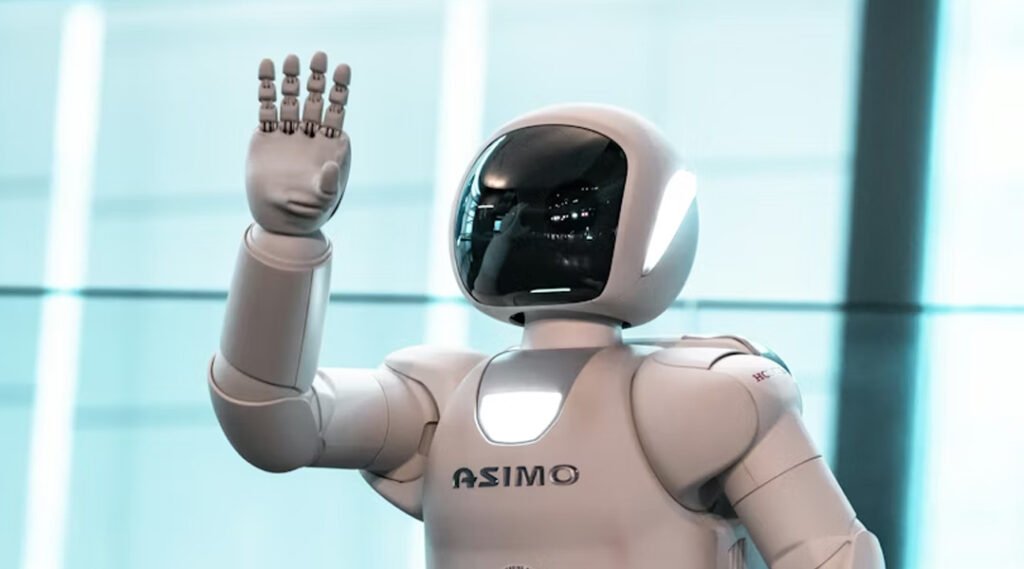
Humanoid robots represent a different kind of ambition. They are not being designed mainly to fit into a factory that was built for machines. They are being designed to work in environments created for people. That includes warehouses, hospitals, retail spaces, homes, laboratories, logistics centers, and even factory floors that still rely on human workflows.
This is a much harder problem. Human environments are inconsistent. Objects are placed irregularly. Lighting changes. People move unpredictably. Tools vary. Surfaces differ. Tasks often involve exceptions rather than repetition. A robot that wants to operate in this setting must combine mobility, perception, dexterity, planning, and adaptation in one platform.
That is what makes humanoid robots so interesting. Their value does not come from narrow optimization. It comes from compatibility. If a humanoid robot can truly move through existing human spaces and complete useful work without requiring major redesign, it could become a highly flexible automation layer. It could reduce the need to build robotics-specific infrastructure around every task.
But that promise comes with serious technical and commercial challenges. A humanoid robot is not just a machine that looks like a person. It is a machine that must handle a level of environmental complexity that industrial robots almost never face.
The real challenge is not shape, but system integration
Many discussions about humanoid robots focus on appearance. That is the least important part of the story. The harder problem is system integration. A humanoid robot must coordinate walking or rolling, balance, arm movement, object recognition, force control, task planning, and decision-making at the same time. Each of those systems is difficult on its own. Combined, they create an engineering challenge that is much larger than the sum of the parts.
This is where the architecture of the robot becomes a business issue. Industrial robots are designed around specialization. They are built to do a few tasks extremely well. Humanoid robots are being built around generalization. They are expected to do many different things across many different settings. That difference affects cost, reliability, maintenance, and deployment speed.
In practical terms, specialization is easier to commercialize. Generalization is more difficult to scale. A company can justify an industrial robot when it knows exactly how much productivity improvement the machine will deliver. A humanoid robot must prove something more ambitious: that it can be flexible enough to handle varied work, and reliable enough to make that flexibility economically worthwhile.
Supply chains are forming around two separate ecosystems
One of the most important but least visible differences between these two robot categories is the supply chain behind them. Industrial robotics benefits from a mature industrial ecosystem. Its components, standards, integration methods, and maintenance practices have developed over decades. That maturity lowers risk and improves scalability.
Humanoid robotics does not yet enjoy that level of industrial stability. It depends on a more fragile and rapidly evolving stack of technologies: advanced sensors, compact actuators, control systems, embedded computing, high-density batteries, motion-planning software, and AI-driven perception. Each layer is still developing. Each layer can become a bottleneck.
This means humanoid robotics is not only a product category. It is an ecosystem in formation. That ecosystem has to mature before the category can scale broadly. And because every major subsystem is changing at once, the industry faces a classic coordination problem. If the actuators are too weak, the robot cannot perform useful tasks. If the battery life is too short, uptime suffers. If perception is unstable, reliability drops. If the software cannot coordinate the hardware, the robot remains impressive but impractical.
Industrial robots do not face the same level of uncertainty. Their chain is established. Humanoid robots are still trying to build theirs.
AI improves humanoid robots, but it does not eliminate physical limits
Artificial intelligence has changed the conversation around robotics. It has made humanoid robots far more plausible than they were a few years ago. Better perception models, better planning systems, and better learning methods have all expanded what robotic systems can do. That is one reason humanoid robots now attract so much attention.
Still, AI should not be mistaken for a magic solution. Intelligence helps a robot decide what to do. It does not remove the physical constraints of doing it. A humanoid robot still needs to move its body through real space. It still has to manage torque, wear, heat, friction, and power consumption. It still needs stable coordination between motion and manipulation. It still must function in the real world, where uncertainty is constant.
This is why the most realistic view of humanoid robotics is incremental rather than revolutionary. AI can make the systems smarter. It can improve flexibility and resilience. It can reduce the amount of manual programming required. But it does not erase the gap between a laboratory demo and a commercially dependable machine.
The first successful use cases will be narrow and practical
The most effective humanoid robot deployments are likely to begin with narrow, high-value use cases rather than broad labor replacement. That may include specific logistics tasks, inspection roles, material handling, and support work in environments that are built for humans but need automation. The humanoid form factor matters most when it can work inside existing infrastructure without forcing expensive redesign.
This is the most commercially realistic path. Humanoid robots are more likely to win first where flexibility matters more than speed, and where compatibility matters more than raw throughput. They will not replace industrial robots in high-volume manufacturing. Instead, they may complement them by filling gaps that fixed automation cannot easily cover.
Industrial robots will continue to dominate repetitive production work. Humanoid robots may become valuable in the messy middle: the space between human labor and machine automation, where tasks are variable, environments are dynamic, and pure efficiency is not the only requirement.
Why the market should be viewed as a layered automation economy
The future of robotics is not a single market moving toward a single end state. It is a layered automation economy. At one layer, industrial robots will continue to support factories with speed, precision, and endurance. At another layer, humanoid robots will attempt to operate in human spaces with flexibility, mobility, and adaptive intelligence.
That layered structure is important because it changes how strategic decisions should be made. Businesses should not treat humanoid robots as a direct replacement for industrial systems. They should treat them as a different class of automation, one that may unlock new workflows rather than simply lowering the cost of old ones.
This perspective also explains why the market may develop more slowly than headlines suggest. The promise of humanoid robots is large, but the path to scale runs through reliability, safety, maintenance, component maturity, and economics. Those are difficult problems, and they do not disappear because a robot looks human-shaped.
Two robot categories, two industrial logics
Humanoid robots and industrial robots are often placed in the same conversation, but they belong to different automation logics. Industrial robots are optimized for repetition in controlled settings. Humanoid robots are designed for adaptability in human environments. One solves for efficiency. The other solves for compatibility.
That distinction will shape the robotics industry for years to come. Industrial robots are already embedded in modern manufacturing. Humanoid robots are still proving whether they can become a durable commercial platform. Their success will depend not on how closely they resemble people, but on whether they can create reliable value in environments built around people.
For RulerHub readers, the most important takeaway is simple: the future of robotics is not one technology replacing another. It is a widening divide between specialized automation and general-purpose physical intelligence. Understanding that divide is the first step to understanding where the next wave of industrial value will emerge.
More Articles for This Topic
Collaborative Robots: The Cornerstone of Tomorrow’s Manufacturing
The Era of Intelligent Agents: AI’s Shift from “Tool” to “Partner”
Humanoid Robotics Face-Off: Assessing Tesla Optimus and Its Top Competitors
Humans and Machines Unite: Embracing Industry 5.0 and Seizing Its Promise
From Fiction to Reality: Could “I, Robot” Unfold in Our AI-Driven Future?
Connected Intelligence: How Smart IoT Technologies Underpin the Future of Robotics
Wiring Tomorrow’s Workforce: Integrating Smart IoT, 5G, Cloud, and AI to Forge a Robust Robot World