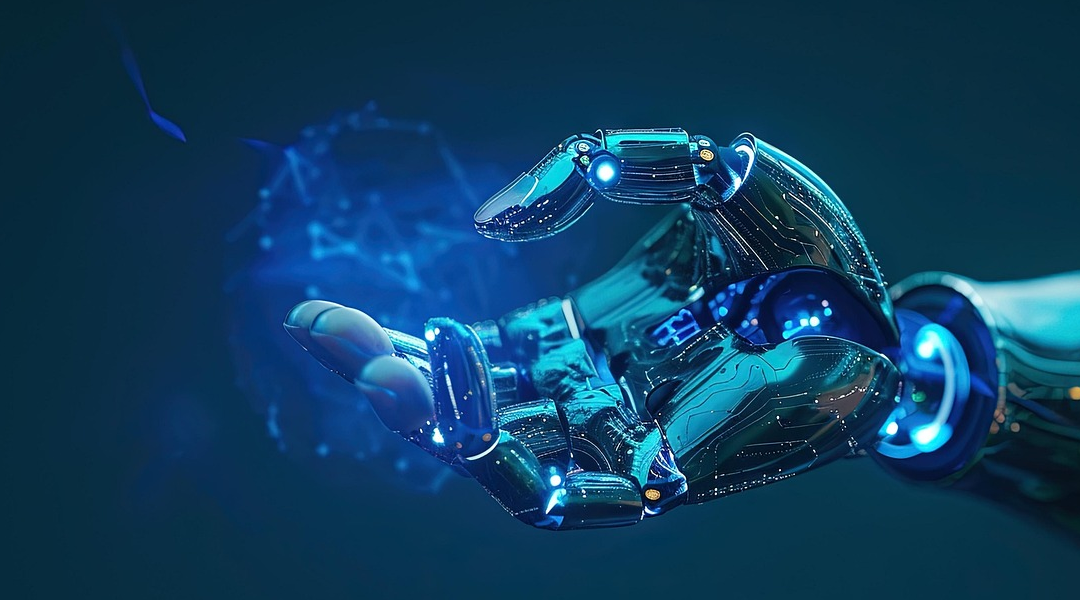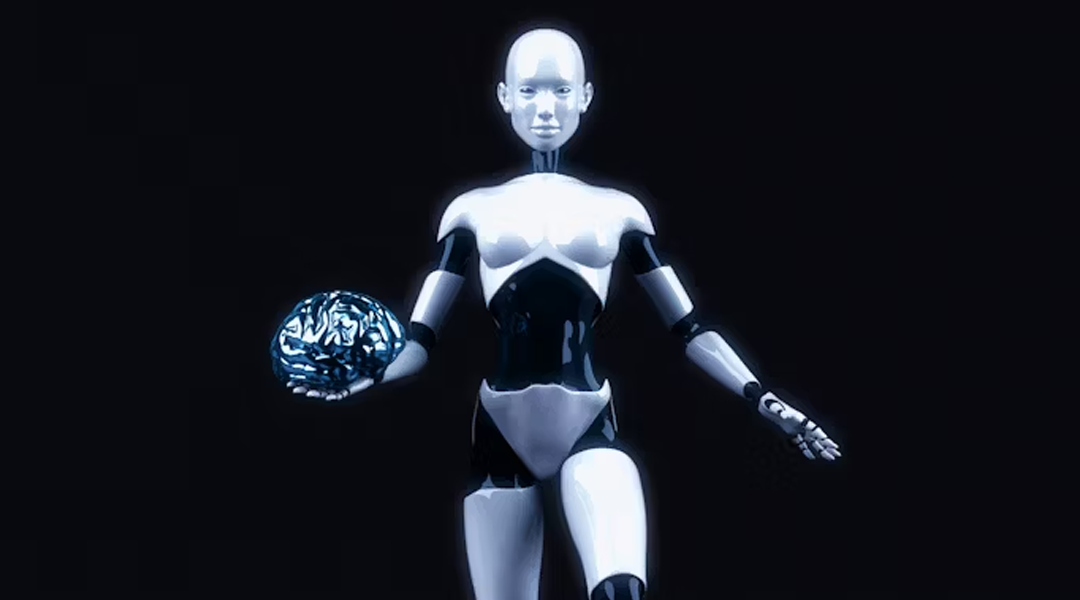
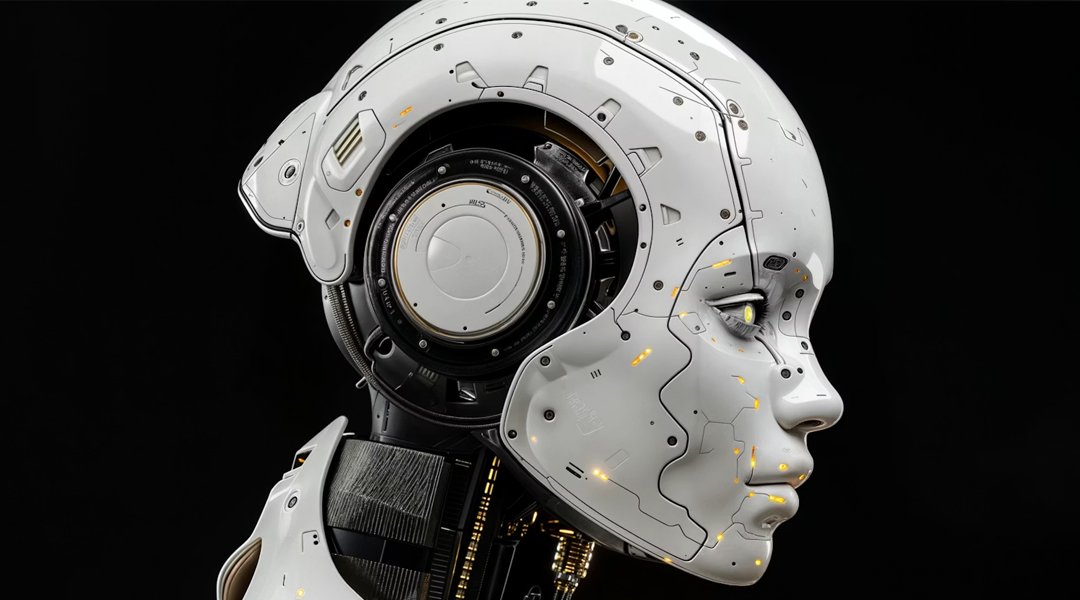
The robotics industry is moving through one of its most important turning points in decades. For a long time, public attention has been captured by the same striking image: a humanoid robot standing upright, walking through a warehouse, assisting in a home, or performing tasks that once belonged to people. The appeal is obvious. A machine that looks and moves like a human seems to promise a future in which robotics can enter nearly every environment without requiring that environment to change.
Yet commercial reality rarely rewards the most cinematic idea. It rewards the most deployable one.
At RulerHub, we see the next phase of robotics not as a race to build the most human-like machine, but as a race to build the most effective machine for a specific operating scenario. That distinction matters more than it first appears. The future of robotics will likely be shaped less by general-purpose humanoid ambition and more by scenario-driven autonomy: robots designed around narrowly defined tasks, measurable workflows, and clear economic outcomes.
This is not a rejection of humanoid robotics as a field. It is a recognition that commercialization follows a different logic than spectacle. A robot can be impressive and still be a poor business product. It can attract headlines and still fail to deliver dependable returns. It can resemble a human and still be far less practical than a machine built for one environment, one process, and one job.
The most successful robotics systems are often not the ones that imitate human form. They are the ones that solve a business problem with the least friction possible.
Commercial Success Begins With Workflow, Not Form
A common mistake in robotics discussions is to start with the shape of the robot instead of the structure of the work. But in commercial settings, shape is secondary. The first question is not “What should the robot look like?” The first question is “What task does this robot solve, under what conditions, and at what cost?”
This is why specialized automation has historically outperformed broad imitation. Industrial arms did not become essential because they looked like people. They became essential because they executed repeated motions better, faster, and more consistently than people could. Their success came from removing unnecessary complexity, not reproducing human anatomy.
That principle still applies today.
A warehouse robot does not need legs if wheels are more stable and efficient. A cleaning robot does not need hands if a purpose-built system can navigate, sense, and operate with greater uptime. A logistics robot does not need to be human-shaped if it can move goods more reliably in a constrained environment. In each case, the business objective is the same: better output, lower operating cost, and consistent performance.
Humanoid robots often begin from the opposite assumption. They try to preserve human compatibility in every possible setting. That may be elegant in theory, but in practice it introduces a premium in engineering, power consumption, maintenance, safety, and deployment complexity.
Commercial robotics is not won by the machine that can do the most in theory. It is won by the machine that can do enough, repeatedly, and profitably.
The Humanoid Promise Carries a Heavy Complexity Burden
The humanoid form is emotionally persuasive, but technically expensive. Every feature that makes a robot more human-like also tends to increase the number of things that can go wrong.
Bipedal movement is a good example. Walking on two legs is not simply “better mobility.” It is a fragile balancing act that requires continuous control, sensor fusion, rapid adjustment, and substantial energy management. Humans make bipedal movement appear natural because biology has had immense evolutionary time to optimize it. Machines do not inherit that advantage.
Then there is dexterity. Human hands are incredibly capable, but reproducing that level of precision mechanically is costly. The same is true for force control, tactile sensing, obstacle handling, joint coordination, and real-world recovery from errors. The more closely a robot mirrors human capabilities, the more it inherits human-level complexity without human-level adaptability.
This creates what RulerHub views as a structural burden on commercialization. The humanoid model takes on too many hard problems at once. It does not simply solve task automation. It also has to solve locomotion, balance, manipulation, power efficiency, physical safety, and environmental versatility in one package.
That is a difficult path for any technology company, especially when customers are asking a far more practical question: can this product perform a task reliably enough to justify the cost?
The answer to that question often favors narrower systems.
Scenario-Driven Autonomy Is a Better Commercial Fit
Scenario-driven autonomy starts from a more disciplined premise. Instead of designing a machine that can theoretically operate anywhere, it designs one that excels in a clearly defined setting. The environment may be semi-structured, repeatable, or operationally bounded. The robot does not need to be universal. It only needs to be excellent within its scenario.
This approach has several advantages.
First, it reduces uncertainty. The fewer variables a robot must handle, the easier it is to guarantee performance.
Second, it accelerates deployment. Businesses can integrate a purpose-built robotic system more quickly when the system is tailored to a known workflow.
Third, it improves ROI. A robot that solves one painful bottleneck at scale is often more valuable than a general-purpose platform that promises versatility but delivers slower adoption.
Fourth, it lowers maintenance and support complexity. Specialized systems are easier to service, monitor, and optimize when they are not trying to function like a human in every setting.
At RulerHub, we believe this is where the real commercial momentum is likely to accumulate. The most successful robotics companies may not be those that chase a universal humanoid ideal. They may be the ones that identify the highest-value scenario and build a system engineered specifically for it.
That is a different business philosophy, and in many ways a stronger one.
Real-World Deployment Rewards Predictability
A commercial robot is not judged by how impressive it looks in a demo. It is judged by how it behaves after deployment. That is where the gap between concept and commerce becomes visible.
In controlled demonstrations, many robotic systems appear extremely capable. They may walk, grasp, lift, carry, and interact in ways that suggest broad autonomy. But real deployment is harsher than any demo floor. It introduces variable lighting, clutter, wear and tear, irregular objects, human unpredictability, surface changes, weather, noise, and operational pressure.
A robot that performs well in ideal conditions may struggle once it enters a live environment. And in a business context, unreliability is expensive. Downtime disrupts workflow. Errors create labor overhead. Safety concerns increase liability. Maintenance needs reduce return on investment.
This is why predictability matters so much. A machine that can do fewer things but does them consistently may be far more commercially attractive than a machine that can do many things unreliably.
Scenario-driven robots are better suited to this reality because their environments can be designed, constrained, or standardized. The more stable the operational context, the greater the chance of dependable performance. That translates directly into better economics.
The most important question in robotics is not whether a machine can move like a human. It is whether it can be trusted to perform inside a business process day after day.
Why the Market Often Confuses Attention With Adoption
The humanoid robot narrative benefits from a powerful form of market psychology. People naturally assign more importance to technologies that resemble themselves. Investors, media outlets, and audiences are drawn to robots that seem to signal a dramatic future. A humanoid robot is easy to photograph, easy to headline, and easy to imagine.
But attention should not be mistaken for adoption.
Technologies often pass through a phase where symbolic power exceeds practical utility. The public becomes fascinated by the most futuristic version of a product long before the product itself is ready for broad use. Robotics is currently experiencing that tension.
A humanoid robot can be a powerful proof of ambition. It can show that a company has technical talent, systems integration skills, and long-term vision. But proof of ambition is not proof of commercial readiness.
RulerHub believes this is where sober analysis becomes essential. The market should not ask which robot generates the biggest reaction. It should ask which robotic model creates the strongest and fastest path to scale.
In almost every industrial category, the answer tends to favor specialization.
The Next Stage of Robotics Will Be Measured by Operational Density
One of the most useful ways to understand robotics commercialization is to think in terms of operational density. That means asking how deeply a robot can penetrate a specific environment and how consistently it can contribute to that environment’s core operations.
A scenario-driven robot can often achieve high operational density because it is built around the actual needs of the task. A warehouse robot may be tightly integrated into inventory movement. An agricultural robot may be engineered around harvest timing and field conditions. A hospital robot may focus on transport, delivery, or disinfection. A factory robot may specialize in assembly support or inspection.
These systems do not need to solve the entire universe of physical labor. They need to become indispensable in a specific part of it.
That is a much more attainable and commercially rational goal.
Humanoid robotics, by contrast, often aims at breadth before depth. It tries to be widely applicable before it has proven reliable in any one demanding domain. That can create a seductive narrative, but it often slows adoption. Businesses do not adopt products because they are broad in theory. They adopt them because they are deeply useful in practice.
The future of robotics may therefore be less about universal replacement and more about gradual infiltration of high-value operational niches.
RulerHub’s View: The Real Robotics Revolution Will Be Quiet
The loudest robotics stories are not always the most important ones. In fact, the most transformative wave may happen in the quietest places: warehouses, distribution centers, production lines, ports, farms, hospitals, and maintenance systems.
At RulerHub, we expect the robotics revolution to look less like a world of humanoid assistants and more like a hidden layer of industrial intelligence. Robots will increasingly function as infrastructure rather than entertainment. They will not need to be impressive in the same way a stage demo is impressive. They will need to be effective, repeatable, and embedded into business operations.
That shift has major implications.
It means the winners may not be those with the most viral prototypes. They may be those with the strongest deployment strategy.
It means the strongest robotics businesses may not chase the broadest possible market first. They may dominate one vertical, then expand outward through operational expertise.
It means that the future of automation may be less visible to consumers but far more valuable to the economy.
This is the kind of change that tends to define industrial eras. The most important technologies are often those that become normal, not those that remain spectacular.
The Central Truth of the Robotics Era
The humanoid robot is a powerful symbol, but commercial robotics is not built on symbols alone. It is built on deployment, reliability, and economics. That is why scenario-driven autonomy is likely to outperform the humanoid myth as the foundation of large-scale robotics commercialization.
The machines that win will not necessarily be the ones that resemble humans the most. They will be the ones that deliver dependable value inside clearly defined scenarios. They will solve real problems, reduce operational friction, and scale in ways businesses can justify.
From the RulerHub perspective, this is the central truth of the robotics era: form matters far less than function, and function matters far less than profitable deployment.
The future of robotics will not be decided by how human a robot looks. It will be decided by how useful it becomes in the places where work actually happens.
FAQ
What is scenario-driven autonomy in robotics?
Scenario-driven autonomy refers to robots built for specific environments and tasks rather than broad human-like versatility. These systems are optimized for real operational workflows.
Why are humanoid robots difficult to commercialize?
Humanoid robots carry high complexity because they must solve balance, movement, manipulation, sensing, and safety all at once. That raises cost and slows practical deployment.
Why do specialized robots often scale faster?
Specialized robots work in bounded environments where conditions are more predictable. That makes them easier to deploy, maintain, and justify financially.
Does this mean humanoid robots have no future?
No. Humanoid robots may still have important roles in select use cases. The point is that their commercialization path is likely narrower and slower than many expect.
What industries are most likely to adopt scenario-driven robots first?
Logistics, warehousing, manufacturing, agriculture, healthcare operations, inspection, and infrastructure maintenance are among the strongest candidates.
What is RulerHub’s main viewpoint on robotics?
RulerHub believes the real commercial future of robotics belongs to practical, scenario-specific autonomy rather than universal humanoid imitation.
More Articles for the Topic
Humanoid Robots vs. Industrial Robots : Divergent Architectures, Distinct Industrial-Chain Barriers
The AI Cost Dilemma: Balancing Heavy Tech Investment with Workforce Impacts
Is Software Reshaping and Redefining the Automotive Industry?