
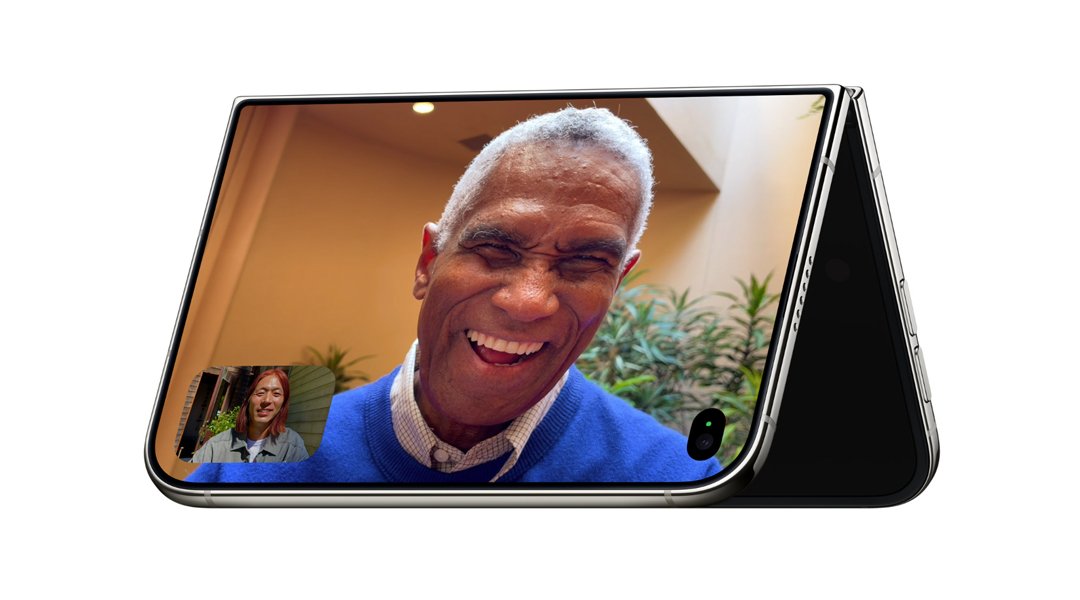
Apple officially unveiled the iPhone Duo on September 9, 2026. The first foldable iPhone features a 7.6-inch internal display, a 5.4-inch external display, the A20 Pro chip, and a redesigned iOS 27 experience. Preorders are scheduled to begin on October 16, with availability starting October 23.
This means the most relevant story is no longer whether Apple will develop a foldable iPhone. It is why Apple believes now is the right time to change the shape of its most important product.
The following is a fresh, reader-friendly RulerHub analysis based on Apple’s announcement and industry reporting.
Why Apple Launched the iPhone Duo: The Bigger Strategy Behind Its First Foldable iPhone
For nearly two decades, the iPhone has followed a familiar formula: a rectangular screen, a compact body, and a growing collection of features designed to make everyday life easier.
Apple has now taken a major step away from that formula.
On September 9, 2026, the company introduced the iPhone Duo, its first foldable iPhone. When opened, the device offers a 7.6-inch display. When closed, it uses a 5.4-inch outer screen. It is powered by Apple’s A20 Pro chip and features an operating system adapted to the foldable format.
The Duo starts at $1,999 in the United States, making it the most expensive iPhone in Apple’s current lineup.
The launch is significant, but the bigger story is what Apple hopes to achieve with this new design.
Why enter a market that Samsung and other manufacturers have already explored? Why charge such a high price? And can a foldable iPhone change the way people use mobile technology?
RulerHub’s view is that the iPhone Duo represents Apple’s attempt to redefine the role of the smartphone—not simply to give users a larger screen.
1. Apple Wants to Change What an iPhone Can Do
The traditional smartphone is already remarkably capable.
People use their phones to communicate, work, shop, watch videos, take photographs, and manage their daily lives. Yet the basic shape of the device has remained largely unchanged.
This creates a challenge for Apple.
When a customer’s existing iPhone still performs well, a faster processor or a slightly better camera may not be enough to inspire an upgrade.
The iPhone Duo offers a more visible change.
Users can carry a compact device for everyday tasks and open it when they need more screen space. Apple says the larger display is designed for multitasking, gaming, and viewing content.
Imagine reading a lengthy report while traveling, comparing two websites, or watching a video without relying on a relatively narrow screen.
A foldable device can make these activities more comfortable.
RulerHub’s perspective
The real appeal of a foldable phone is not that it has more screen area.
It is that one device can adapt to different situations.
That flexibility may create a more meaningful upgrade opportunity than incremental hardware improvements. However, it will only matter if people find themselves using the larger screen regularly.
2. Apple Is Entering the Foldable Market With a Different Strategy
Apple is not the first company to build a foldable smartphone.
Samsung, Huawei, and other manufacturers have spent years developing flexible-screen devices. Their products have helped establish the category while also revealing challenges involving durability, thickness, software, and pricing.
Apple’s later entry gives it an opportunity to learn from that market.
Rather than competing on the novelty of being first, Apple can focus on how the different components work together.
The iPhone Duo combines:
- A folding display with a consistent screen ratio between the two modes.
- A redesigned iOS 27 interface.
- A hinge designed for repeated opening and closing.
- The A20 Pro chip and a specialized thermal-management system.
- Features designed around the two-screen configuration.
Apple describes this combination of hardware and software as central to the Duo’s design philosophy.
The company is also working with developers to make applications more suitable for the larger display.
Why this matters
A foldable phone can be technically impressive and still feel awkward to use.
The transition between the outer and inner screens needs to be smooth. Applications must respond appropriately to different layouts. The hardware must feel comfortable in both configurations.
RulerHub’s interpretation: Apple’s objective is to make foldable technology feel like a natural extension of the iPhone experience, rather than an entirely separate type of device.
Whether it succeeds will depend on how well the product performs in everyday use.
3. The iPhone Duo Is a Premium Product—and Its Price Is Part of the Strategy
The iPhone Duo starts at $1,999 in the United States. Higher-storage configurations can cost considerably more, with the top reported price reaching $3,199.
This is not a product designed to compete primarily on affordability.
Instead, Apple is positioning the Duo as a high-end device for consumers who place significant value on its design and capabilities.
That approach may help Apple introduce a complex new product without immediately trying to bring foldable technology to the mass market.
It also creates a clear challenge.
Consumers will want to know whether the Duo offers enough additional value to justify the price difference between it and a conventional iPhone.
What might attract buyers?
Some potential customers may value:
- A larger display without carrying a separate tablet.
- A distinctive premium design.
- New ways to use the camera.
- Expanded multitasking capabilities.
- Integration with Apple’s existing ecosystem.
These are potential use cases, not confirmed customer preferences.
RulerHub’s view
The Duo’s high price makes the product’s positioning especially important.
Apple must persuade customers that the device is more than a luxury object or a technological curiosity.
Its long-term value will depend on how often people use its distinctive features—and whether those features justify the additional expense.
4. The Foldable iPhone Could Bring Smartphone and Tablet Experiences Closer Together
For many years, smartphones and tablets have occupied different roles.
A smartphone is easy to carry and convenient for quick tasks. A tablet offers more screen space for reading, entertainment, and productivity.
The iPhone Duo sits between these two experiences.
Its 7.6-inch internal display gives users a larger working area while retaining the ability to fold the device into a more compact form.
Apple has introduced Split View multitasking, allowing users to open two applications side by side. The Duo also supports multiple windows of the same application, such as Safari.
These features could be useful in situations such as:
Travel: Reading itineraries while checking maps or messages.
Work: Reviewing documents while communicating with colleagues.
Entertainment: Watching content on a larger screen without carrying another device.
Research: Comparing information from two applications simultaneously.
Of course, a foldable phone does not automatically replace a tablet or laptop.
Some tasks still benefit from a larger display, a physical keyboard, or more powerful desktop software.
RulerHub’s analysis
The Duo’s opportunity is not necessarily to eliminate other devices.
It is to make carrying one versatile device more attractive in certain circumstances.
That could be particularly relevant to people who value portability but frequently find a conventional smartphone screen too restrictive.
5. Apple’s Engineering Priorities Go Beyond the Foldable Screen
The most visible feature of the Duo is its folding display. But the less obvious engineering decisions may determine whether the product succeeds.
Foldable smartphones must balance several competing requirements.
They need to be thin enough to carry comfortably, robust enough to withstand repeated folding, and powerful enough to operate efficiently in both configurations.
Apple says the Duo incorporates a precision hinge, a nano-texture finish intended to reduce glare and crease visibility, and a dual-battery design. It also uses a custom vapor chamber to help manage heat.
These features address practical challenges associated with a high-performance foldable device.
The company has also emphasized its use of titanium and its focus on durability.
However, marketing claims and engineering specifications are only part of the story.
The real test will be how the device performs after extended ownership.
Questions that matter to consumers
- Does the hinge remain smooth after years of use?
- How well does the inner display resist damage?
- Is the device comfortable to hold for long periods?
- How much does the folding mechanism affect repair costs?
- Does the battery deliver reliable performance in both screen modes?
RulerHub’s view: Foldable innovation must be measured in everyday reliability, not just design sophistication.
A device that looks impressive at launch must also deliver a dependable ownership experience.
6. Apple Is Using the Duo to Explore a New Generation of AI-Powered Computing
The iPhone Duo is arriving at a time when artificial intelligence is becoming an increasingly important part of the smartphone experience.
Apple has equipped the device with the A20 Pro chip and integrated it with Apple Intelligence and its new Siri AI experience. Apple says the Duo can use personal context and onscreen awareness to help users find information and perform tasks.
The foldable design could make these capabilities more useful.
For example, a user might ask Siri to help revise a document while keeping the original content visible on the other side of the screen.
A larger display can also make it easier to review AI-generated information, compare results, and interact with multiple applications.
RulerHub’s perspective
AI does not automatically become more useful simply because a device has a larger screen.
The real opportunity lies in combining more display space, more flexible multitasking, and more capable software.
If Apple can make those elements work together naturally, the Duo could become more than a foldable phone. It could serve as a practical personal computing hub.
However, the usefulness of these features will depend on software quality, regional availability, and how much control users have over AI-powered functions.
7. The Camera Shows How Apple Is Rethinking the Foldable Experience
Apple has also designed new camera experiences around the Duo’s folding structure.
The company says the device supports features such as Smart Take, which uses on-device AI to help capture moments when subjects are ready, and Duo Preview, which allows people to see a camera preview on the outer display.
These features illustrate an important point.
A foldable device does not have to be useful only because of its larger screen. Its physical design can also create new ways to interact with familiar functions.
Consider taking a group photograph.
With the device positioned in a partially folded configuration, users may be able to frame a shot more conveniently while allowing the people in front of the camera to see the preview.
Apple has also introduced camera and FaceTime features that make use of the two-display design.

RulerHub’s view
The strongest foldable features are those that would be difficult to reproduce on a conventional smartphone.
This is where Apple’s design choices become particularly interesting.
However, consumers will need to determine whether these new camera experiences are genuinely useful or simply occasional conveniences.
8. The iPhone Duo Could Strengthen Apple’s Broader Ecosystem
Apple’s business is not limited to iPhone hardware.
The company operates a broad ecosystem that includes applications, cloud services, accessories, and other devices.
A new iPhone design creates opportunities across these areas.
Software developers
Developers may need to reconsider how their applications use screen space, navigation, and multitasking.
Apple has highlighted its efforts to support applications optimized for the Duo’s expanded display.
If enough customers adopt the device, developers may have stronger incentives to create more sophisticated foldable experiences.
Accessory manufacturers
The Duo requires specialized protective cases and carrying accessories.
Apple has introduced a dedicated case and a folio with an integrated kickstand for the device.
This creates opportunities for accessory manufacturers, although the unusual design also introduces additional engineering requirements.
Apple services
A foldable iPhone could encourage customers to spend more time using services such as iCloud and Apple’s broader software ecosystem.
However, additional service revenue is not guaranteed simply because a new device has been introduced.
RulerHub’s interpretation: The Duo’s impact may extend beyond the hardware itself, but its wider ecosystem value will depend on how many people adopt the product and how they use it.
9. Apple’s Entry Could Reshape the Competitive Landscape
Apple’s arrival may bring more attention to the foldable smartphone category.
According to Reuters, foldables were expected to account for less than 3% of global smartphone sales in 2026. Samsung remained a leading player in the category, while analysts expected Apple’s entry to stimulate additional interest.
Apple’s involvement could influence the market in several ways.
More consumer interest
Some iPhone users who previously ignored foldable smartphones may now consider the category.
Greater competitive pressure
Android manufacturers may respond with new designs, improved software, or alternative pricing strategies.
More innovation
Competition could encourage manufacturers to explore different approaches to hinges, displays, battery systems, and device construction.
A wider premium market
Apple’s brand recognition could attract customers who were already interested in premium foldable devices.
These are possible market effects rather than guaranteed outcomes.
The foldable segment still faces challenges involving pricing, durability, and customer demand.
RulerHub’s view
Apple’s entry is important because it brings a major smartphone ecosystem into a category that is still developing.
But the company’s influence should ultimately be measured by customer adoption and lasting market impact—not simply by the attention generated at launch.
10. The Biggest Challenge: Who Is the iPhone Duo Actually For?
This may be the most important question surrounding Apple’s new product.
The Duo offers an unusual combination of portability and screen space, but its premium price means it will not appeal to every iPhone user.
Reuters reported that analysts have questioned whether the device has a clearly defined audience, given its price and the range of activities it is designed to support.
RulerHub’s analysis
Apple’s central challenge is straightforward:
Can it persuade customers that the advantages of a foldable design outweigh its financial and practical compromises?
The answer will vary from one user to another.
11. What Will Determine the Long-Term Success of the iPhone Duo?
The introduction of a new product is only the beginning.
Apple’s foldable strategy will become clearer as customers begin using the Duo and the company evaluates the results.
Several factors deserve attention.
Customer experience
Do users find the larger screen useful in everyday situations?
Durability
Can the folding mechanism and display withstand years of regular use?
Software development
Will developers continue creating applications that make the expanded screen more useful?
Manufacturing efficiency
Can Apple eventually reduce the cost of producing foldable devices?
Future product development
Will subsequent models become lighter, thinner, more affordable, or more capable?
These factors could influence whether Apple’s foldable portfolio remains a premium niche or becomes a more important part of the iPhone business.
At this stage, it is too early to draw definitive conclusions about the Duo’s long-term commercial performance.
RulerHub’s Final Take: Apple’s Foldable Bet Is About More Than a New Screen
Apple’s introduction of the iPhone Duo marks a significant change in the design of its flagship smartphone.
The company is entering a market that competitors have already helped establish, but it is bringing its own approach to hardware integration, software design, artificial intelligence, and premium positioning.
The Duo offers Apple several potential opportunities:
- A new way to differentiate the iPhone.
- A more substantial upgrade option for some customers.
- A closer connection between smartphone and tablet-style experiences.
- New possibilities for applications, accessories, and AI-powered workflows.
- A platform for exploring future foldable products.
At the same time, the product faces genuine challenges.
Its price is high. Its design introduces additional engineering complexity. Some hardware compromises may matter to customers who prioritize photography or battery performance. And its long-term value will depend on how often people use its distinctive features.
RulerHub’s view is that the iPhone Duo should be understood as Apple’s first major experiment in changing the physical boundaries of the smartphone.
Its success will not be determined by its launch-day popularity alone.
The more important questions will be whether users find the device genuinely useful, whether the hardware proves reliable, and whether Apple can make foldable technology more compelling over time.
Apple has now entered the foldable era. The next stage of the story will be written by consumers, developers, and the broader market.
The question is no longer whether smartphones can fold.
It is whether folding a smartphone can meaningfully improve the way people live, work, and connect.
That is the question RulerHub will continue to explore.
Frequently Asked Questions
1. What is the iPhone Duo?
The iPhone Duo is Apple’s first foldable iPhone, unveiled on September 9, 2026. It features a 7.6-inch internal display and a 5.4-inch external display, combining smartphone portability with a larger screen for multitasking and entertainment.
2. Why did Apple launch the iPhone Duo?
Apple’s foldable strategy may help the company introduce a new smartphone experience, differentiate its premium product range, and explore the overlap between smartphones and tablets.
The device also gives Apple an opportunity to combine a new form factor with redesigned software and AI features.
3. How much does the iPhone Duo cost?
The iPhone Duo starts at $1,999 in the United States. Higher-storage configurations are priced higher, with the top reported price reaching $3,199.
4. When will the iPhone Duo be available?
Apple announced that preorders will begin on October 16, 2026, with availability starting October 23, 2026. The September announcement was the product’s official unveiling, rather than its general retail release.
5. Is the iPhone Duo a replacement for the iPad?
Not necessarily.
The Duo provides a larger display than a conventional iPhone, but an iPad may still be more suitable for people who need a larger workspace or extended productivity sessions.
The two devices have overlapping capabilities but serve different needs.
6. What are the main advantages of the iPhone Duo?
Potential benefits include a larger display, flexible viewing modes, expanded multitasking, and new camera experiences made possible by the folding design.
The actual benefits depend on individual usage patterns and software support.
7. What are the main challenges facing the iPhone Duo?
The main challenges include its high price, foldable-display durability, hinge reliability, device ergonomics, and whether consumers consider the larger screen essential.
Some hardware differences compared with conventional Pro models may also influence purchasing decisions.
8. Will Apple develop more foldable iPhones?
Apple may expand its foldable product range if customer demand, manufacturing conditions, and product performance support further development.
Future models and release plans should not be treated as confirmed unless Apple officially announces them.
9. How could the iPhone Duo affect the smartphone industry?
Apple’s entry could increase consumer awareness of foldable smartphones, encourage developers to support flexible displays, and intensify competition among premium smartphone manufacturers.
The actual impact will depend on adoption and how competing companies respond.
10. Is the iPhone Duo worth buying?
That depends on each user’s budget, priorities, and need for a foldable display.
Potential buyers should consider the Duo’s price, screen experience, portability, durability, camera capabilities, and alternatives before making a decision.