The shorthand comparisons — “a smartphone with four wheels” or “a supercomputer on wheels” — catch headlines, but they don’t capture what modern electric vehicles (EVs) actually are. By 2025 the industry has moved well beyond simple metaphors. EVs are integrated technical ecosystems that combine propulsion, energy management, hardware manufacturing, software and services.
1. Electrification is an irreversible industry trend
Electrification has shifted from optional to inevitable. In Q1 2025 EVs represented roughly 28% of global new-car sales, up from 18% in 2023; the IEA’s Global Electric Vehicle Outlook 2025 projects this share will exceed 30% by year end, and reach roughly 45% in China. Major regions (EU, US, Japan) have accelerated timelines to phase out new gasoline vehicle sales by the mid-2030s, with Norway and the Netherlands targeting 2030.
As Andreas Ziegler (McKinsey) observed in 2025, the debate is no longer “if” but “how fast” and “how.” The value chain is being reshaped rapidly; industry forecasts expect EV-related activities to represent a majority of automotive profits by 2030.
2. Technology breakthroughs are systematically addressing early bottlenecks
Battery technology. Average driving range for mainstream EVs reached about 550 km by 2025 (up ~37.5% from 400 km in 2022). Advances in cell chemistry and pack design — for example, CATL’s third-generation Kirin cell reported ~280 Wh/kg energy density in early 2025 — have materially improved range and energy efficiency. Semi-solid-state cells are in commercial use, and several OEMs target all-solid-state cells for mass production in the 2027–2028 window.
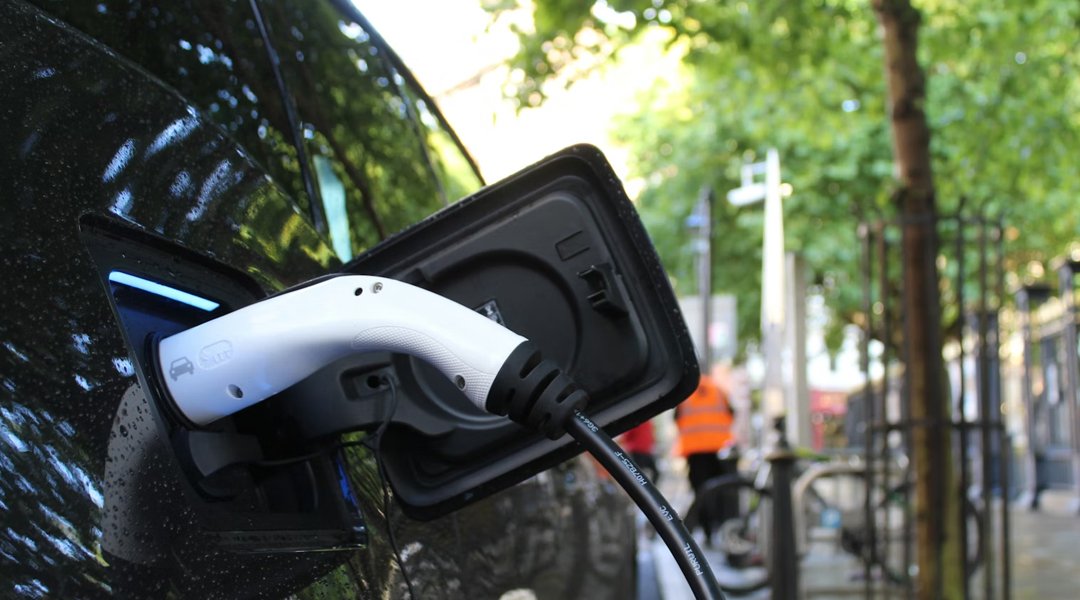
Charging infrastructure. Global public charging points are projected to exceed 28 million by 2025, with fast chargers composing roughly 35% of that base. Regulatory and build-out efforts in the EU and China have accelerated corridor coverage and highway service-area penetration, reducing range-anxiety and enabling longer trips with shorter charging stops.
Safety. Improvements in battery management systems, cell chemistry, and thermal-runaway mitigation have driven down EV fire rates substantially; projected declines in 2024–2025 approach the low-double-digit percentages relative to 2020 baselines. Safety reporting in 2025 also shows EVs with modestly lower overall injury rates than equivalent ICE vehicles, reflecting improved systems integration and active safety features.
3. Manufacturing complexity is now a differentiator
Scaling high-quality EV production is difficult and capital intensive. Market outcomes in 2025 show divergence: established, vertically integrated players (e.g., Tesla, BYD) scale profitably, while a number of smaller entrants with weaker manufacturing capability have exited or underperformed. KPMG’s 2025 survey found a strong industry consensus that manufacturing EVs at high quality and volume is more challenging than widely assumed.
Transforming assembly lines, qualifying new materials, and integrating large battery packs increase R&D and capex intensity: EV R&D intensity is roughly 2.3× that of legacy ICE vehicles, and line-conversion investment can be ~1.8× higher. Mastering EV production is not merely retrofitting ICE processes — it requires redesigning factories, supply chains and test regimes.
4. Tesla in 2025: an integrated technological complex
Tesla’s 2025 posture illustrates how hardware, energy and software converge at scale:
- Vertical integration: scaled 4680 production approaching hundreds of GWh annually; in-house silicon carbide inverters and expanded cell manufacturing reduced dependency on external suppliers.
- Manufacturing innovation: large structural castings drastically reduced part counts in the body-in-white, simplifying assembly and lowering costs.
- Computing and AI: Dojo’s next generation substantially increased training throughput; Tesla’s fleet-based FSD training surpassed multi-billion-mile datasets supporting incremental safety and autonomy gains.
- Energy ecosystem: a global supercharger network and integrated home energy/storage offerings created cross-sell and gross-margin opportunities.
Tesla framed itself in 2025 as an energy-transport company, arguing that while software defines the user experience, physical and manufacturing innovation set the operational limits.
5. Five dimensions to understand modern EVs
- Systems of systems. EVs are transportation hardware and mobile energy nodes, grid endpoints, and continuous data sources. Fleet and vehicle telemetry now generate orders of magnitude more data per unit time than legacy vehicles.
- Diverse technology pathways. Battery electric vehicles dominate but hybrids, range-extenders and fuel-cell solutions retain niche value. Market mixes through 2030 will reflect use-case specialization.
- Shifting industrial value. As vehicle architectures converge, a larger share of value migrates toward batteries, software and services, reducing the relative share of traditional mechanical manufacturing.
- Lifecycle sustainability. Regulations (e.g., EU battery rules effective in 2025) increase transparency and require minimum recycled content, making circular-economy capabilities a strategic advantage.
- Evolving safety and security standards. Regulatory frameworks in 2025 expanded to include cybersecurity, functional safety and battery integrity — elevating requirements well beyond those for conventional vehicles.
Neither a single-dimension smartphone nor solely a mobile supercomputer
By 2025, EVs are neither a single-dimension smartphone nor solely a mobile supercomputer. They are integrated platforms that combine electrical, mechanical and digital systems with energy-grid interactions and lifecycle constraints. Success in this era demands cross-domain engineering and industrial mastery — from chemistry and thermal systems to software, manufacturing and regulatory compliance.
As industry leaders emphasize, the future vehicle is a mobile, intelligent space that simultaneously solves mobility, energy management, data services and personalization. Reducing that to a single metaphor risks obscuring the technical, industrial and regulatory complexity that will determine winners and losers in the coming decade.
More articles for the topic
Tesla vs. Toyota: A Battle of Strategies and Future Integration
How Code Is Breaching the Century-Old Walls of the Auto Industry
The Next Charge: How EV Battery Technologies Are Evolving for Range, Speed, and Sustainability
Battery Circularity & Grid Synergy: Recycling, Second-Life EV Packs, and the Growing Role of V2H
Smart Car IoT: Unpacking Its Origins, Impact, and Future Trajectory