Elon Musk stood in front of Tesla’s solar roof, pointed to the sky, and said, “That’s a giant fusion reactor, safely suspended 93 million miles away. All we have to do is to learn how to capture its energy.” Behind this statement lies a grand proposition concerning the future of human civilization.
Tesla CEO Elon Musk has emphasized his core argument on multiple occasions: “Solar energy is the only answer to human energy freedom.” He believes that the sun is a giant, free nuclear fusion reactor that delivers far more energy to Earth every day than human needs.
Musk envisions a complete sustainable energy ecosystem centered on solar energy, combined with battery storage and electric vehicles.
Why Pursue Energy Freedom?
Energy freedom means that society has access to a sufficient, stable, affordable, and clean energy supply, unconstrained by geopolitics, resource depletion, or environmental costs. The finite nature of fossil fuels, their uneven distribution, and the climate change caused by their combustion constitute a core challenge to contemporary civilization .
According to data from the International Energy Agency (IEA), energy production and consumption are the source of approximately three-quarters of global greenhouse gas emissions. Over-reliance on imported energy sources such as oil and natural gas has become a vulnerability in the energy security of many countries.
Energy freedom is therefore not only an environmental goal, but also the cornerstone of economic independence, political stability, and social resilience.
Deciphering Musk’s “Sole Answer” Theory of Solar Energy
In one of the interviews, Tesla CEO Elon Musk explicitly stated that solar energy is the “only answer” to achieving human energy freedom. This assertion is based on a fundamental fact: the sun is a giant nuclear fusion reactor that has been operating stably for billions of years and will continue to operate for billions of years.
The energy it pours onto Earth every day far exceeds the total annual demand of all human civilization. Musk’s logic is clear and grand: the potential of solar energy is essentially limitless, and its acquisition does not trigger geopolitical conflicts; the key lies in whether humanity can capture, convert, and store this energy at a sufficiently low cost and with sufficiently high efficiency.
He believes that the exponential curve of technological progress will solve the cost problem. Over the past decade, the cost of photovoltaic power generation has decreased by more than 90%, making it the cheapest source of electricity in many parts of the world.
This trend continues. Secondly, he envisions not a single solar panel, but a complete ecosystem integrating photovoltaic power generation, large-scale battery storage, and smart grids. In this system, surplus electricity generated during the day is stored and used at night or on cloudy days, thus addressing the problem of intermittency.
Therefore, in Musk’s view, other energy pathways (such as nuclear and wind power) either have fundamental limitations in terms of scale or security, or are merely transitional solutions. Only solar energy possesses the physical foundation and scale potential to provide ultimate, inclusive energy freedom.
Current Status of the Solar Energy Industry
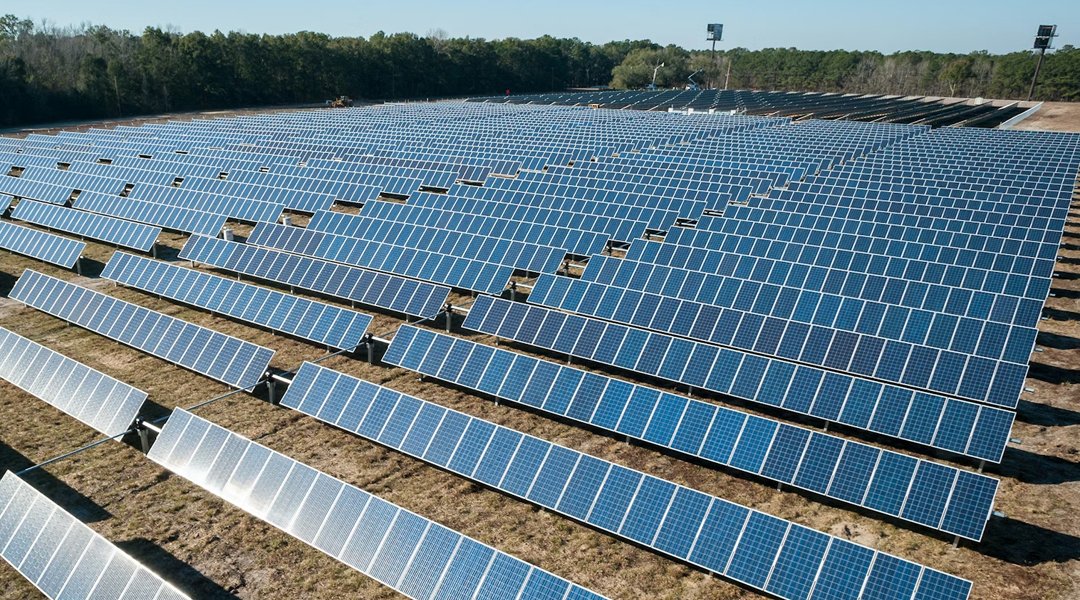
Currently, the global solar energy industry is experiencing unprecedented expansion, growing from a marginal alternative energy source into the main force for global electricity growth.
According to the International Energy Agency’s (IEA) “World Energy Outlook 2023” report, renewable energy will become the world’s largest source of electricity by early 2025, with solar energy contributing more than half of the new capacity.
China is undoubtedly the super engine of the global solar energy industry, holding an absolute dominant position in manufacturing . Data from the China Photovoltaic Industry Association shows that in 2023, China’s output of polysilicon, silicon wafers, solar cells, and modules all accounted for more than 80% of the global total.
On the application side, distributed photovoltaic power and large-scale photovoltaic power plants are developing in parallel, with China, the European Union and the United States being the three major markets.
Technological iteration is also accelerating. Breakthroughs continue in photovoltaic cell conversion efficiency, with high-efficiency cell technologies such as N-type TOPCon and HJT being rapidly commercialized, and next-generation technologies such as perovskite demonstrating great potential in laboratories and pilot projects.
Bloomberg New Energy Finance (BNEF) analyst Jenny Chase points out: “The decline in solar costs has completely changed the game in the power industry. It is no longer an expensive green sentiment, but a hardcore economic option.”
The Core Obstacles to Industry Development
Despite its promising future, solar energy still faces several major hurdles in becoming the “only solution.” The core obstacles stem primarily from its own physical characteristics and the current architecture of the power system.
The most pressing issue is intermittency and instability. Solar power is highly dependent on the weather, with day-night cycles and varying weather conditions causing significant fluctuations in its output. This poses a substantial challenge to the real-time balance and safe, stable operation of the power grid.
As Paul Denholm, a senior researcher at the National Renewable Energy Laboratory (NREL), stated: “Large-scale integration of renewable energy is fundamentally a systems integration challenge, not just a power generation issue.”
Secondly, energy storage cost and scale remain bottlenecks. Although battery costs are also decreasing, current electrochemical energy storage is still technically and economically immature in order to meet grid-scale, cross-seasonal long-term energy storage demands.
And, the power grid infrastructure and institutional mechanisms are lagging behind. The existing power grid is designed for centralized, dispatchable thermal power plants, and requires large-scale upgrades and transformations, as well as the establishment of market mechanisms and dispatch models adapted to a high proportion of renewable energy.
Furthermore, the sustainability of the manufacturing industry and the resilience of the supply chain have also raised concerns. The photovoltaic manufacturing process itself is energy-intensive, and the supply of key mineral materials is concentrated in a few regions, posing potential risks.
Possible Solutions for Overcoming Core Obstacles
Addressing these challenges requires multidimensional innovation in technology, systems, and policies.
On the technological front, next-generation photovoltaic technologies (such as perovskite/crystalline silicon tandem cells) are expected to push conversion efficiency to over 30% and further reduce costs.
Long-duration energy storage technologies are a key breakthrough, including compressed air energy storage, flow batteries, gravity energy storage , and the production and storage of green hydrogen , all of which are under exploration.
At the system level, it is essential to build a more flexible, smarter, and more interconnected power grid. This includes vigorously developing ultra-high-voltage transmission to balance wide-area resource disparities, and constructing “virtual power plants” and microgrids centered on distributed energy resources to enhance local absorption and balancing capabilities.
At the institutional level, it is necessary to deepen the reform of the electricity market, establish a market mechanism that can fully reflect the value of flexibility and ancillary services, and incentivize the participation of flexible resources such as energy storage and demand-side response.
International Renewable Energy Agency (IRENA) Director General Francisco La Camera emphasized: “We must accelerate the development of integrated system solutions and flexible grid infrastructure investments, which are key to unlocking the potential of renewable energy.”
How AI Can Better Serve the Solar Energy Industry
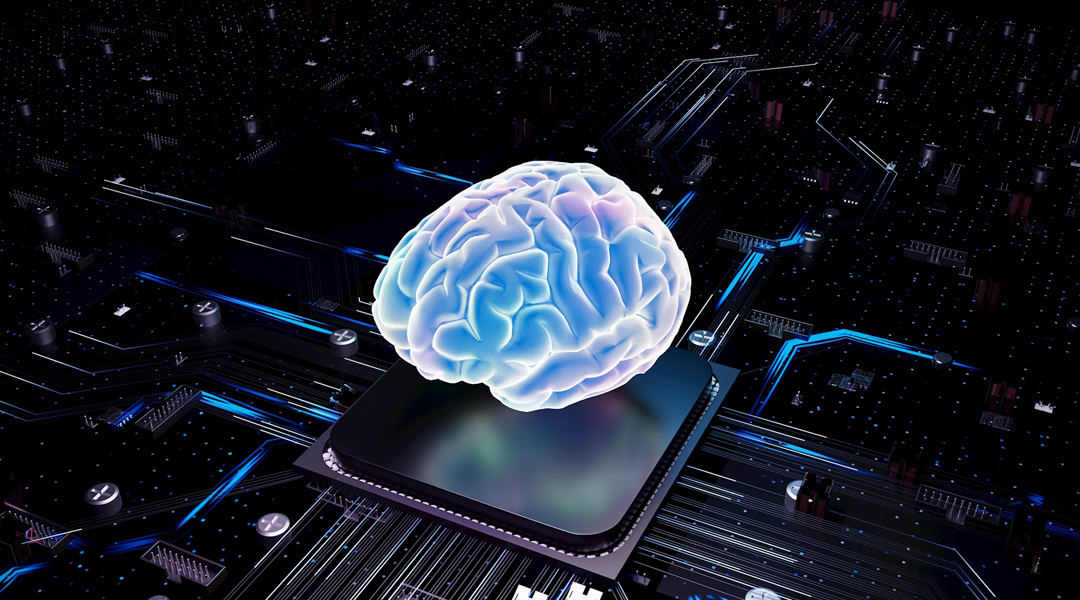
Artificial intelligence (AI) is becoming a revolutionary tool driving the leapfrog development of the solar energy industry, improving the industry’s efficiency and intelligence from multiple dimensions.
On the power generation side, AI can be used for ultra-short-term and short-term power generation forecasting. By analyzing satellite cloud images, meteorological data, and historical output, AI models can greatly improve forecast accuracy, providing a more reliable basis for grid dispatching.
On the operation and maintenance side , AI systems based on computer vision and drone inspections can automatically identify faults such as hot spots, microcracks, and dust obstruction on photovoltaic panels , realizing the transformation from “regular inspections” to “precise predictive maintenance,” significantly reducing operation and maintenance costs and increasing power generation.
On the grid and energy storage management side, AI algorithms can optimize the charging and discharging strategies of energy storage systems to maximize their economic value. Simultaneously, AI can be used to optimize grid power flow, prevent faults, and automatically restore power supply, enhancing the resilience and reliability of the grid under conditions of high renewable energy integration.
On the R&D and manufacturing side, AI can accelerate the discovery of new materials and new battery structures. Through high-throughput computing and machine learning, it can screen out promising perovskite material combinations or push the yield and efficiency of photovoltaic module manufacturing processes to their limits.
At Google ‘s DeepMind, once said, “Machine learning has shown amazing potential in optimizing complex energy systems, making intermittent renewable energy highly predictable and controllable.”
Undoubtedly the Most Powerful and Core Engine on the Road to Energy Freedom
With its inherent advantages of unlimited resources, low cost, and wide distribution, solar energy is undoubtedly the most powerful and core engine on the road to energy freedom . Musk’s description of it as the “only answer” highlights its irreplaceable physical potential and ultimate vision .
However, translating its potential into a stable and reliable reality still requires overcoming a series of challenges, including system integration, energy storage, and the power grid. Solar energy is not the only path, but it must be the largest and most crucial piece in the future energy puzzle.
The ultimate vision of energy freedom will likely be a hybrid system with solar and wind power as the base load, supported by diverse energy storage technologies (including hydrogen), centered on a smart grid, and possibly supplemented by some nuclear energy.
Humanity’s energy freedom may not have a single answer, but solar energy will undoubtedly write its most glorious chapter.
More Articles for the Topic
Which Clean Energy Source Reigns Supreme for Sustainable Development?
How Clean Energy Is Transforming Our Daily Lives for the Better
How AI Technologies Are Powering the Future of Clean Energy
Powering a Greener Future: How Clean Energy Can Save the Earth
(#10) Next‑Generation Clean‑Energy Innovations & the Road Ahead
How Traditional, Clean, and Renewable Energy Together Form a Strong and Sustainable Energy System
All articles on the Special Edition of Clean Energy, please click here.