Cybercab Manifesto
AI isn’t the car’s future — it’s the endgame.
“When autonomous driving matures, owning a car will be like owning a horse.”
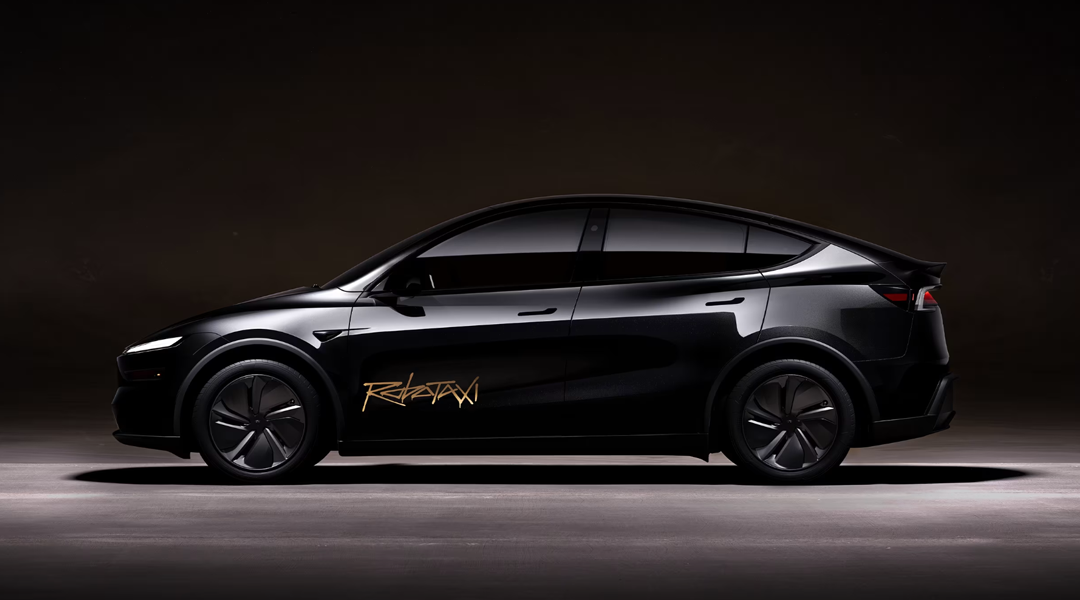
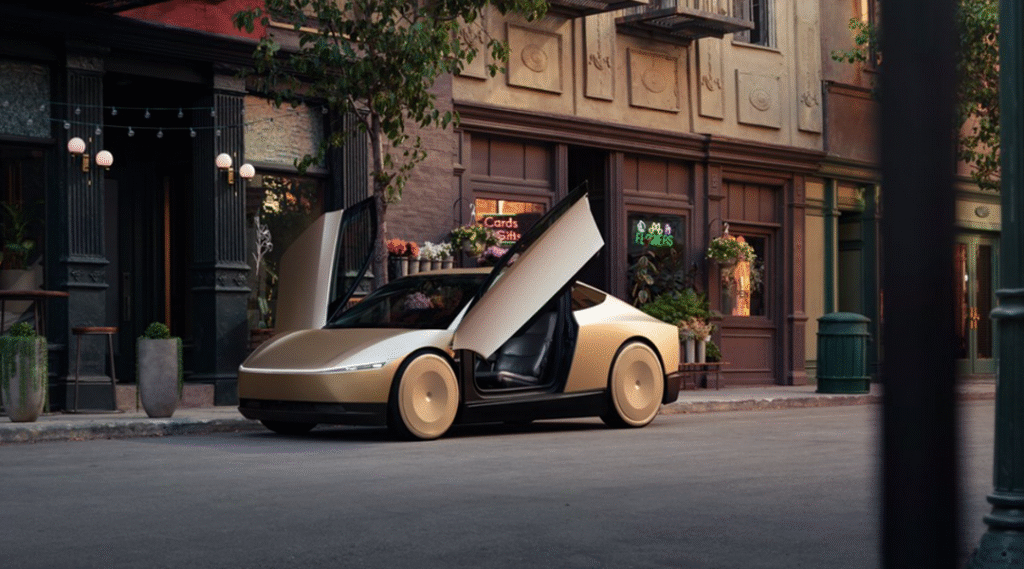
When Elon Musk mentioned Tesla’s Cybercab, he didn’t just roll out another futuristic vehicle. He delivered a philosophical mic drop for the global auto industry: the age of cars — as we’ve known them for over a century — is coming to an end.
No steering wheel. No pedals. No human driver required.
Cybercab isn’t designed to be driven — it’s designed to drive itself.
This is more than an evolution in automotive design. It’s the start of a paradigm war, one that pits traditional automakers against a new vision of cars as intelligent robots on wheels.
The Great Unmaking of “Car”
Cybercab’s most radical act isn’t what it adds — it’s what it removes.
The absence of a steering wheel isn’t a design quirk. It’s a declaration of independence — from humans.
Inside, Cybercab looks less like a cockpit and more like a mobile living room, a hint at Tesla’s new value proposition: the car as experience space.
Where past automotive revolutions focused on horsepower, range, or luxury materials, this one focuses on what happens when you stop driving altogether.
“Tesla didn’t just redesign the car — it redefined what a car even is.”
But the bigger disruption is economic. Cybercab wasn’t built for personal ownership; it’s an operational asset, meant to live inside a networked fleet of autonomous taxis.
Tesla isn’t selling cars — it’s building an AI mobility empire.
Musk’s logic is simple and brutal: private ownership is inefficient. In his world, Robotaxis outperform human drivers in cost, uptime, and safety. The battleground shifts from factories and dealerships to data centers and traffic algorithms.
From Software-Defined to AI-Defined
Cybercab represents the next evolutionary leap in machine intelligence.
We’ve spent a decade talking about “software-defined vehicles” — cars that update like smartphones. But Cybercab pushes the idea to its logical extreme.
Welcome to the AI-defined vehicle era.
Where the old software stack managed entertainment, navigation, and updates, Cybercab’s neural networks handle everything that matters: path planning, decision-making, and environmental prediction.
The steering wheel didn’t just disappear — so did human decision authority.
Tesla’s edge lies in its data moat — billions of miles of real-world driving information feeding its “real-world AI.” Every trip, every stop sign, every edge case becomes training material for the network. That’s a self-reinforcing feedback loop that traditional automakers can’t easily replicate.
As ARK Invest’s Cathie Wood has argued, “Tesla is an AI robotics company disguised as a carmaker.” Cybercab is the embodiment of that thesis.
Consensus, Resistance, and the Race Ahead
Everyone agrees the future is intelligent. No one agrees on how to get there.
Even the industry’s biggest players can see the horizon — they just differ on how to survive the journey.
- Musk’s maximalism: Go all-in on full autonomy. Shrink urban congestion, electrify fleets, eliminate wasted time and space.
- Legacy caution: Automakers like Volkswagen and Toyota prefer incrementalism — a careful climb from Level 2 to Level 3 autonomy. The hesitation is legal and cultural: liability, regulation, and cost are dragons still guarding the gate.
- China’s acceleration: For Chinese automakers, intelligent driving has become a national strategy. From Baidu Apollo to XPeng, the country’s AI-driving arms race is already in the elimination round. As XPeng’s He Xiaopeng put it: “Our goal is to make driving intelligence as reliable as a driver — and then replace the driver entirely.”
The Roadblocks on the Roadless Road
Between vision and viability lies the “last mile” of reality.
- The long tail problem. Autonomous driving handles 99% of traffic cases — but the final 1% of unpredictable human chaos remains unsolved.
- The regulatory gray zone. No steering wheel? No laws for that. Liability in accidents is still a legal vacuum.
- The economics test. The Robotaxi model depends on near-zero downtime and ultra-high utilization — but R&D and hardware costs could eat profits before the system scales.
The Uneven Arrival of the Future
AI won’t take over the road overnight — but it’s already rewriting its map.
Tesla’s Cybercab may not flood city streets tomorrow, but it’s done something arguably more important: it’s made the future tangible.
We’ve moved from theory to inevitability. The conversation is no longer “if” AI will define mobility, but “when” — and who will own that intelligence.
The industry’s value metrics are shifting fast: from horsepower and luxury trim to algorithmic efficiency, autonomy reliability, and uptime economics.
The car of the future isn’t built in a factory. It’s trained in the cloud.
Cybercab is Tesla’s loudest signal yet that the car has reached its evolutionary ceiling — and that the next revolution belongs not to drivers, but to machines.
More for the similar topic
Tesla Takes on Nvidia: Can Musk’s AI Chips Dethrone the Silicon King?
Is Tesla Powerwall the Best Home Battery?
Is the Tesla Cybertruck Truly Reinventing the Pickup — and Will It Drive the Industry Forward?