
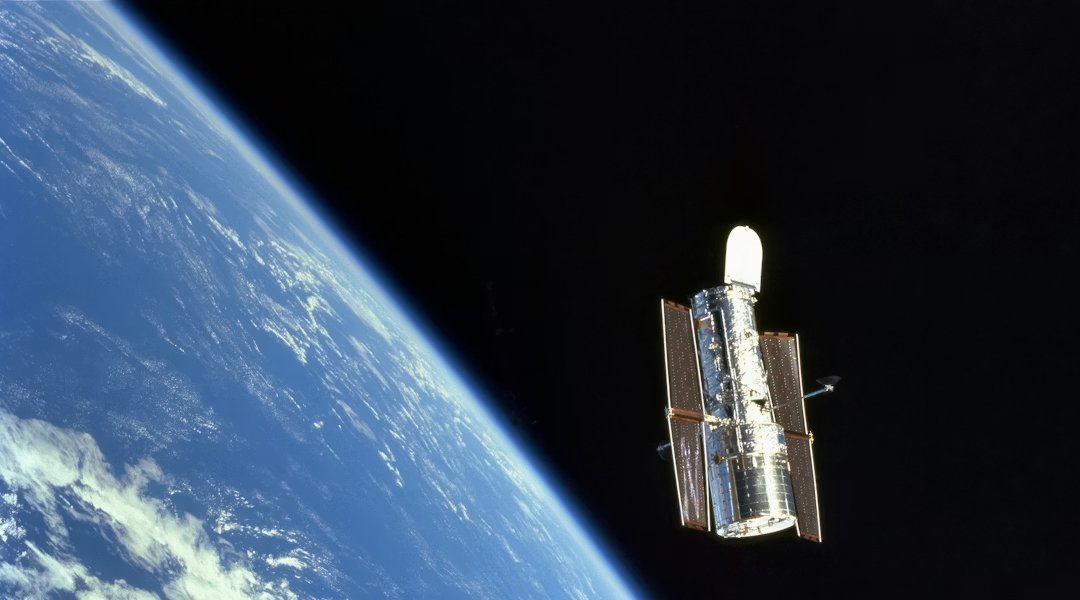
The conversation around space data centers has shifted from novelty to serious strategic debate. That change is not driven by imagination alone. It is being pushed by a very real infrastructure problem: the explosive growth of artificial intelligence, cloud services, and digital workloads is increasing pressure on electricity supply, cooling systems, land availability, and capital spending. The International Energy Agency reported that data centre electricity demand surged by 17% in 2025, while McKinsey estimates that global data-center spending could reach $6.7 trillion by 2030 if compute demand continues expanding at its current pace. Those figures explain why the idea of building computing infrastructure beyond Earth is no longer being treated as pure science fiction.
RulerHub’s position is that space data centers should be evaluated as a serious infrastructure hypothesis, not as a marketing spectacle. The important question is not whether the concept sounds futuristic. The important question is whether it can deliver a better balance of energy access, operational resilience, and economic efficiency than the already strained terrestrial model. On that test, the concept remains promising but far from proven.
Why the idea is gaining traction
The appeal of space-based computing is easy to understand once the current state of digital infrastructure is considered. Data centers on Earth are becoming more difficult and more expensive to build at scale. Grid access is constrained in many regions, permitting takes longer, cooling systems are increasingly complex, and large facilities face land, water, and community pressure. At the same time, AI workloads are making power density and thermal management more demanding than ever. McKinsey’s analysis of the compute boom makes clear that this is not a minor adjustment to the old model; it is a full-scale infrastructure race.
Space appears attractive because it seems to offer a way around several of these constraints. Solar energy is more predictable in orbit than on Earth. There is no land scarcity in the conventional sense. And the vacuum of space encourages people to assume cooling may be simpler. That combination makes the concept intuitively powerful. But intuition is not the same as feasibility. The market has seen many ideas that sounded elegant until engineering, maintenance, and cost realities were introduced.
The energy argument is real, but incomplete
The strongest argument for space data centers is energy access. If compute can be powered by continuous solar energy in orbit, then in theory it can avoid some of the pressure that terrestrial data centers place on local power grids. That matters because electricity availability is becoming one of the defining bottlenecks of the AI era. The IEA’s recent reporting on rising data center electricity demand confirms that the problem is not hypothetical.
Still, energy is only one part of the total equation. A data center is not valuable simply because it has a power source. It must also be reliable, serviceable, scalable, and financially sustainable. A facility that is cheap to power but expensive to maintain may not be a good business proposition at all. That is where the space concept becomes much more complicated. RulerHub’s view is that the central question is not whether space offers free energy. The question is whether that energy advantage survives the cost of everything else that space requires.
Cooling is not as simple as “space is cold”
One of the most common misconceptions about orbital computing is that the thermal problem will somehow solve itself because space is cold. NASA’s thermal-control guidance shows why that is a shallow reading of the environment. In space, temperature management depends on radiation, insulation, surface design, and the ability to control heat flow in an environment without ordinary atmospheric convection. NASA also notes that thermal systems are highly sensitive to design quality and environmental exposure.
That matters a great deal for data centers, because modern compute systems produce enormous heat loads. High-density AI systems, storage arrays, networking gear, and redundant power components all generate thermal pressure that must be managed continuously. On Earth, this is already one of the largest operating costs. In space, the challenge does not disappear; it changes form. RulerHub sees this as one of the clearest reasons the idea remains technically intriguing but operationally difficult. The thermal problem is not eliminated by moving hardware off the planet. It is simply relocated into a much less forgiving environment.
Maintenance may be the biggest hidden obstacle
If cooling is difficult, maintenance may be even harder. Earth-based data centers are built on the assumption that technicians can access hardware, replace failed parts, repair systems, and manage upgrades over time. Even with heavy automation, physical intervention remains part of the operating model. In orbit, that assumption breaks down. Every repair becomes more expensive, every failure becomes more consequential, and every replacement involves launch logistics.
This is one reason the conversation is more credible when framed around narrow, mission-specific use cases rather than broad cloud replacement. If a spacecraft or orbital system generates data in space, processing that data closer to its source may reduce transmission costs and improve mission performance. That is far more realistic than imagining a giant orbital cloud serving general enterprise workloads at terrestrial price points. ESA’s exploration of space-based data centers follows exactly that kind of logic. The agency has modeled examples such as data relay and off-world processing, which suggests the most serious near-term applications are specialized, not universal.
The economic challenge is still the hardest one
The economics of space infrastructure remain formidable. Building in orbit is expensive, deployment is difficult, hardware must be hardened against radiation and thermal stress, and operations require a level of resilience that terrestrial facilities rarely need to match. McKinsey’s estimate of a multi-trillion-dollar data-center buildout by 2030 shows how capital-intensive the broader industry already is. Adding launch and orbital complexity on top of that creates a much tougher financial model.
Reuters has also reported that SpaceX has warned investors that space-based AI data centers may not be commercially viable and that the technology remains unproven. That is a powerful signal because it comes from a company that is closely associated with ambitious orbital engineering. It does not mean the concept is impossible. It means the commercial threshold remains very high and the market has not yet seen a clear path to profitable scale.
RulerHub’s editorial view is that this is where many futuristic infrastructure concepts either mature or stall. Engineering can often improve over time. Economics are less forgiving. If the cost structure does not close, the technology stays in the prototype phase no matter how exciting it looks.
Where space data centers may actually make sense first
The first realistic use cases are likely to be narrow, specialized, and tied to space operations themselves. This includes remote sensing, satellite data processing, mission autonomy, scientific observation, and data relay systems where downlink bandwidth is limited or costly. ESA’s work is important here because it frames the concept around specific space missions rather than around a vague promise of “cloud in orbit.” That is the more disciplined way to evaluate the idea.
That distinction matters because infrastructure should be designed around the best-fit workload, not around the most dramatic narrative. A general-purpose enterprise data center on Earth can remain the best option for many tasks, especially when low latency, ease of maintenance, and predictable operating costs matter more than orbital proximity. Space may win in some niches, but the assumption that it will replace Earth-based computing across the board is not supported by the current evidence.
From a RulerHub perspective, the likely future is architectural layering rather than replacement. In that model, orbital systems handle specialized tasks, Earth-based systems handle mass-scale cloud and enterprise demand, and the broader digital ecosystem becomes more distributed. That is a much more plausible outcome than a wholesale migration of infrastructure into space.
Why hype should not be confused with inevitability
Space data centers are attractive partly because they sit at the intersection of three powerful narratives: AI growth, energy scarcity, and space innovation. Those stories reinforce one another, which makes the concept feel more inevitable than it really is. Reuters has reported growing attention around space-based AI computing, and that attention can be useful if it encourages serious experimentation. But attention can also inflate expectations beyond what the technology can presently deliver.
RulerHub believes the right posture is cautious curiosity. The concept is too credible to dismiss outright, but too immature to celebrate as a solution. In the same way that electric vehicles, renewable power, and cloud computing all required long development cycles before becoming mainstream, space data centers may also need years of technical refinement before they become economically meaningful. That possibility is real. So is the risk that they remain a premium niche with limited reach.
RulerHub’s conclusion
Space data centers are not pure fantasy, but they are not a ready-made answer to today’s data infrastructure crisis either. The energy case is compelling, the strategic logic is interesting, and the pressure on Earth-based infrastructure is undeniable. Yet the thermal, operational, and financial barriers remain severe. NASA’s thermal guidance underscores how difficult the environment is. ESA’s research shows that the idea is worth exploring. McKinsey and the IEA show why the market is searching for alternatives. Reuters shows that even industry leaders still see major commercial uncertainty.
The most realistic near-term future is not a giant space cloud replacing terrestrial data centers. It is a set of highly specialized orbital systems that support missions where location, autonomy, or proximity to data sources makes the added complexity worthwhile. That is a meaningful opportunity. It is also a very different story from the hype-driven version of the idea. RulerHub’s view is that the real question is not whether space data centers are exciting. It is whether they can become operationally superior for the right workloads. Until that is proven, they remain a promising frontier rather than a finished revolution.
FAQ
What is a space data center?
A space data center is a computing facility designed to operate in orbit or another off-Earth environment, processing or storing data outside Earth’s atmosphere. ESA has explored this concept in relation to data relay and space mission processing.
Why are space data centers being discussed now?
Because AI and cloud growth are increasing data-center electricity demand, capital spending, and pressure on terrestrial infrastructure. The IEA and McKinsey both highlight the scale of that pressure.
What is the biggest advantage of space data centers?
The main theoretical advantage is access to continuous solar energy and the possibility of processing data closer to where it is generated in space.
What is the biggest challenge?
The biggest challenge is the combination of cooling, maintenance, launch cost, and commercial viability. NASA, McKinsey, and Reuters all point to those constraints in different ways.
Will space data centers replace Earth-based data centers?
Not in the near term. The most likely path is a hybrid model in which orbital systems support specialized workloads while most cloud and enterprise infrastructure remains on Earth. That is an inference based on current research and commercial signals.
Are space data centers commercially viable today?
Not at large scale. The current evidence suggests the concept is still experimental and faces major unresolved cost and operations challenges.
More articles for the topic
Harnessing Efficiency: Overcoming Energy and Sustainability Hurdles in Data Centers
Cooling Innovations Powering the Next Generation of Data Centers
Safeguarding the Core—Data Center Security in the Physical and Cyber Domains
Decentralizing the Cloud: The Rise of Edge Computing and Micro Data Centers
The Future of Data Centers: Key Development Trends for the Next 5 to 10 Years