
NVIDIA Rubin Platform: The System-Level Declaration That Could Redefine AI Computing Power
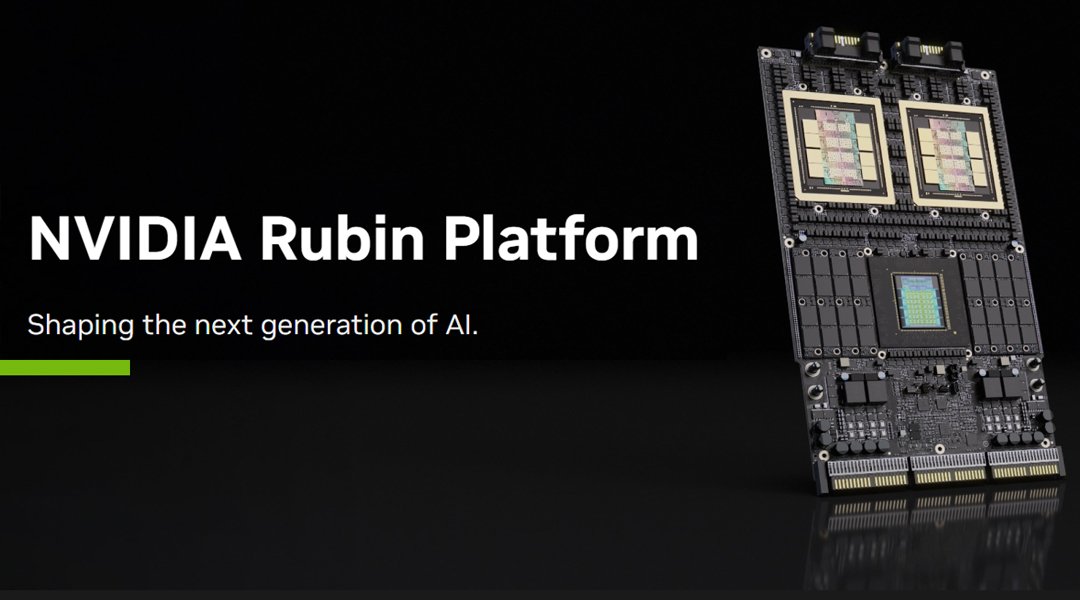
NVIDIA’s Rubin platform is best understood not as a routine chip refresh, but as a statement about where AI computing is headed next. The company’s official launch positions Rubin as the successor to Blackwell and frames it as a platform built through extreme codesign across compute, networking, memory, security, and system architecture. That is an important distinction. NVIDIA is no longer selling the idea of a stronger accelerator alone; it is presenting an entire operating model for AI infrastructure.
From a RulerHub perspective, this matters because the center of gravity in AI has shifted. The most important question is no longer simply “Which GPU is faster?” but “Which system can turn enormous amounts of silicon, power, bandwidth, and software coordination into usable intelligence at scale?” Rubin is NVIDIA’s answer to that question. It is built for the full AI lifecycle, including pretraining, post-training, test-time scaling, and agentic inference, which makes it far more ambitious than a conventional hardware launch.
A platform built for the next phase of AI
Rubin is designed around the reality that modern AI workloads are growing in both size and complexity. NVIDIA says the platform uses extreme codesign across six core chips in its initial architecture: the Vera CPU, Rubin GPU, NVLink 6 Switch, ConnectX-9 SuperNIC, BlueField-4 DPU, and Spectrum-6 Ethernet switch. In its later platform announcement, NVIDIA expanded the story further and said the Vera Rubin platform had seven new chips in full production, intended to scale the world’s largest AI factories.
That evolution is telling. It shows that NVIDIA views AI infrastructure as a layered industrial system rather than a single piece of hardware. Each layer has a purpose: CPUs orchestrate, GPUs compute, interconnects move data, DPUs secure and accelerate traffic, Ethernet fabrics scale the system, and rack-level integration makes the entire structure usable in the real world. Rubin is the attempt to unify those layers so they operate as one machine instead of many disconnected parts.
Why Rubin is more than a faster chip
The strategic meaning of Rubin becomes clearer when you look at what NVIDIA says it will do. The company states that the platform introduces five major innovations, including the latest generations of NVLink interconnect technology, Transformer Engine, Confidential Computing, RAS Engine, and the Vera CPU. NVIDIA says these changes are intended to accelerate agentic AI, advanced reasoning, and large-scale MoE inference at up to 10x lower cost per token than the Blackwell platform.
That cost claim is especially important. In practice, AI adoption is increasingly constrained not by the possibility of building bigger models, but by the economics of running them. Lower token cost means more room for deployment, more room for product experimentation, and more room for enterprise use cases that would otherwise be too expensive. In that sense, Rubin is about market expansion as much as raw performance. It is designed to make frontier AI economically survivable once it leaves the lab and enters production. This is an inference based on NVIDIA’s public cost and efficiency claims.
RulerHub overview: the system is the product
RulerHub’s view is that Rubin illustrates a larger truth about the AI era: the system has become the product. A single chip can deliver impressive benchmark numbers, but enterprise buyers do not purchase benchmark numbers. They purchase reliable throughput, manageable cost, security, operational stability, and deployment speed. NVIDIA’s Rubin platform speaks directly to those concerns by tying chip design to rack design, and rack design to factory-scale deployment.
That is why Rubin should be read as a boundary shift. The old boundaries between chip, rack, network, and data center are dissolving. In their place is a new boundary: the AI factory. The company’s DGX SuperPOD guidance for Rubin-based systems makes this especially visible. NVIDIA says DGX SuperPOD with DGX Vera Rubin NVL72 unifies 14 such systems, uses 1,008 Rubin GPUs, and delivers 50.4 exaflops of FP4 performance plus 1,046TB of fast memory. Those are not component-level numbers; they are system-level claims.
Rack-scale AI is now the core design principle
One of the most revealing aspects of Rubin is how strongly NVIDIA emphasizes rack-scale architecture. The company is not merely offering the pieces of an AI cluster. It is offering the cluster itself as a designed object. NVIDIA’s launch materials highlight rack-based configurations such as Vera Rubin NVL72 and HGX Rubin NVL8, alongside rack-level components intended to provide unified memory and compute space across the rack.
This matters because AI workloads increasingly break the limits of ordinary infrastructure planning. Training frontier models and serving reasoning-heavy applications require enormous bandwidth, careful memory orchestration, and low-latency movement between nodes. NVIDIA’s answer is to design the rack as a coherent unit rather than treating it as a container for disconnected boards and cards. That is exactly what makes Rubin strategically important: it is built for scale from the outset, not retrofitted for scale later.
The AI factory vision gets concrete
NVIDIA has been using the phrase “AI factory” for some time, but Rubin gives that idea operational weight. The company’s Vera Rubin DSX AI Factory reference design and Omniverse DSX digital twin blueprint are meant to help organizations simulate, design, and optimize AI factories before they are physically built. NVIDIA says these tools can accelerate deployment and help improve token-per-watt efficiency, which is a strong signal that energy and facility design are now as important as model quality.
From RulerHub’s perspective, this is one of the most significant implications of the Rubin era. The next phase of AI competition will not be decided only by model accuracy or inference speed, but by how quickly and efficiently organizations can convert capital into operational intelligence. Digital twins matter because they reduce the risk of building the wrong infrastructure. Reference designs matter because they compress planning cycles. Rubin matters because it fits into both of those trends at once.
Why enterprises should pay attention
Enterprises should not think of Rubin as a product for hyperscalers alone. NVIDIA’s public ecosystem around the platform extends into scientific computing, enterprise AI, telecommunication infrastructure, life sciences, and large-scale industrial deployment. The company has already tied Vera Rubin to systems such as Doudna, Blue Lion, and other national or institutional supercomputers, all of which are expected to use the architecture to accelerate research and simulation workloads.
That signals a broader pattern. Rubin is being positioned as a foundational architecture for organizations that need to process massive datasets, run advanced simulations, and deploy agentic AI at scale. For enterprises, the practical takeaway is that AI infrastructure planning is becoming a strategic discipline rather than a hardware purchase. Buyers will need to think in terms of throughput, rack density, memory architecture, security, and lifecycle cost. NVIDIA is clearly pushing the market in that direction.
The timeline also tells a story
The launch timeline itself shows how quickly NVIDIA is moving to operationalize Rubin. On January 5, 2026, NVIDIA introduced Rubin as the next generation of AI computing and positioned DGX SuperPOD as the deployment path for large-scale Rubin systems. On March 16, 2026, the company followed with a broader platform announcement saying Vera Rubin had seven chips in full production and was opening the next frontier of agentic AI.
That sequence is important because it suggests NVIDIA is not treating Rubin as a distant roadmap item. It is a platform being actively rolled into real systems, reference designs, and deployment ecosystems. In other words, the company is trying to turn a roadmap into an industrial standard as quickly as possible. That is usually a sign that the market opportunity is large enough to reward speed, integration, and ecosystem control.
RulerHub’s bottom line
RulerHub sees Rubin as a turning point in how the AI industry defines progress. The old model rewarded isolated breakthroughs. The new model rewards orchestration. It rewards infrastructure that can train, serve, secure, simulate, and scale intelligence as one continuous workflow. Rubin is NVIDIA’s attempt to formalize that model at the hardware, rack, and factory levels all at once.
That is why Rubin is more than a product name. It is a signal that the next era of AI computing power will be measured by platform coherence, not just chip speed. It is a declaration that the boundaries of AI infrastructure are expanding upward into systems engineering, operational design, and industrial planning. And it is a reminder that in the age of agentic AI, the real competition is no longer just about building intelligence. It is about building the machine that can produce intelligence efficiently, repeatedly, and at scale.
FAQ
What is the NVIDIA Rubin platform?
Rubin is NVIDIA’s next-generation AI platform and successor to Blackwell. NVIDIA says it is built with extreme codesign across compute, networking, memory, security, and software, and is intended to support the full AI lifecycle from training to agentic inference.
Is Rubin a single chip or a full system?
It is a full platform, not just a chip. NVIDIA’s announcements describe Rubin as a system that includes the Vera CPU, Rubin GPU, NVLink 6 Switch, ConnectX-9 SuperNIC, BlueField-4 DPU, Spectrum-6 Ethernet switch, and rack-scale systems such as Vera Rubin NVL72 and HGX Rubin NVL8.
How is Rubin different from Blackwell?
NVIDIA says Rubin introduces five major innovations and is designed to accelerate agentic AI, advanced reasoning, and MoE inference at up to 10x lower cost per token than Blackwell. The key difference is not just speed, but the broader system architecture and economics.
What kinds of workloads is Rubin designed for?
NVIDIA says Rubin is built for pretraining, post-training, test-time scaling, and agentic inference. That makes it relevant to frontier model development, enterprise AI deployment, and persistent reasoning-based applications.
Why does NVIDIA keep talking about AI factories?
Because NVIDIA is framing AI infrastructure as an industrial production system. Its Vera Rubin DSX reference design and Omniverse digital twin blueprint are intended to help organizations design and simulate AI factories before deployment, improving efficiency and reducing time to production.
When will Rubin show up in real systems?
NVIDIA has already tied Rubin to multiple real-world systems and deployment paths, including DGX SuperPOD and scientific supercomputers such as Doudna and Blue Lion. Its March 2026 platform announcement also said Vera Rubin had seven chips in full production.
Why does Rubin matter to enterprises outside of AI research?
Because it changes the economics and structure of large-scale AI deployment. Enterprises that need secure, scalable, cost-efficient inference and training will increasingly need platform-level infrastructure, not just standalone accelerators. Rubin is designed around that reality.
*Some information is from NVIDIA Newsroom
More Articles for the Topic
Amazon Trainium 3 Disrupts the AI Chip Market: Reshaping the Landscape and Rational Competition
Tesla Takes on Nvidia: Can Musk’s AI Chips Dethrone the Silicon King?
AI Chip Battle Among NVIDIA, AMD, Intel and More Competitors