Viewing Homes as Flexible Assets
Deep analyses of V2H, V2G, and the future grid-service landscape
As dusk gathers, millions of electric cars settle into driveways and curbside slots. To the casual eye they are inert; to a shifting energy system they are latent batteries on wheels — potential power plants that, with a flip of software and a change in market rules, can turn homes from passive consumers into active, flexible nodes on the electricity grid.
“Homes will stop being endpoints and start acting like living cells in a smart energy network.”
From one-way wires to two-way energy thinking
For a century, electricity moved in a single direction: generation → transmission → home. That model is strained by two simultaneous revolutions — the rise of distributed renewables (solar and wind) and the electrification of transport. The result: more variability on the supply side and higher, sharper demand peaks on the consumption side as millions of EVs charge at similar times.
Enter vehicle-to-home (V2H) and vehicle-to-grid (V2G). They don’t just add another appliance to the house; they rewrite electricity’s flow and purpose. Instead of homes being passive sinks, they become flexible assets that can store, dispatch, and monetize energy.
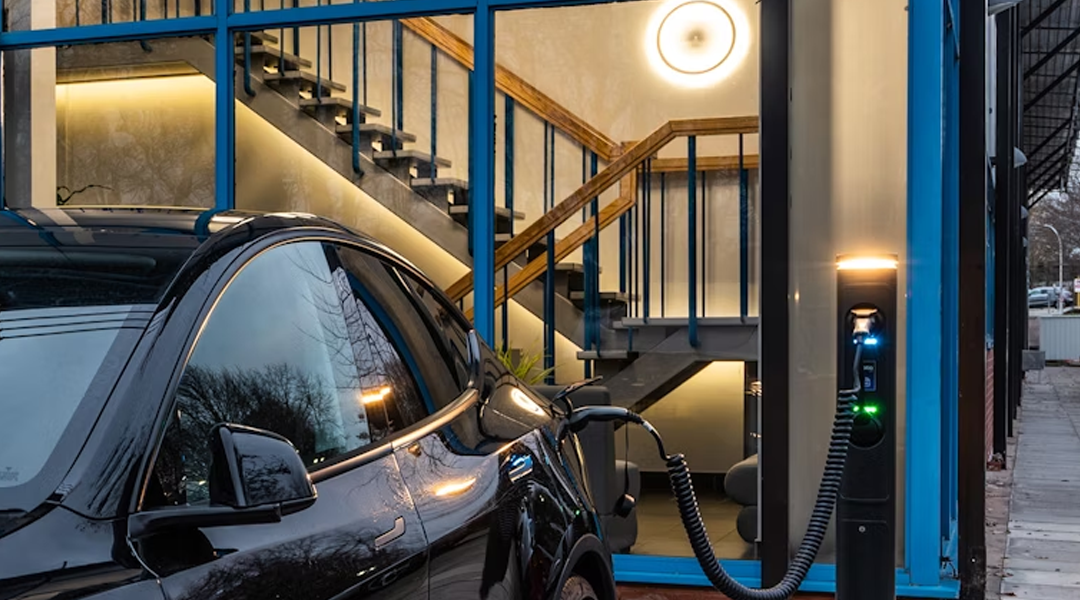
V2H: the domestic safety net
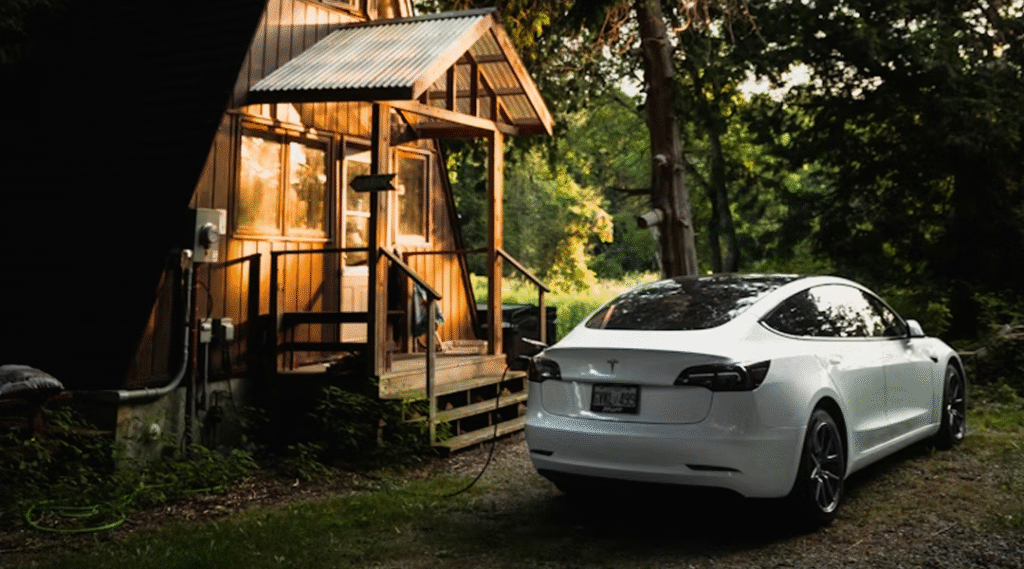
V2H treats the EV as a household battery — not an exotic grid service but practical household resilience and cost management.
When the lights go out or prices spike, a parked EV can reverse its flow and keep the lights on. Japan’s post-quake response offered an early, tangible proof-point: Nissan Leafs were repurposed as emergency power sources for households. In places like California, smart controllers already schedule charging and discharging to shave bills — charging when rates fall, discharging during expensive evening hours. That “residential-grade” use case doesn’t necessarily participate in wholesale markets, but it hands households a degree of energy autonomy they’ve never had.
“When your car becomes the house battery, resilience stops being a luxury and becomes a scheduling choice.”
V2G: turning cars into a distributed power plant
V2G takes the same idea but scales it: tens of thousands of EVs, coordinated through software and market signals, deliver grid services at utility scale.
Imagine fleets charging in the middle of the night when prices dip, then feeding power back at peak, capturing the price spread. Or picture aggregated EV batteries firing sub-second responses to stabilize frequency after a disturbance. Research in the U.K. suggests the theoretical upside is enormous — linking all national EVs via V2G could supply gigawatts of flexible capacity, the equivalent of multiple peaking plants.
This is not science fiction; it’s economics plus orchestration. But to reach that scale we need standardized hardware, robust communications, and market mechanisms that value fast, distributed flexibility.
The mechanics of scaling: tech, markets, and user incentives
Moving from pilots to scale requires three moves in concert: cheaper batteries, interoperable standards, and market reforms that pay for flexibility.
Battery costs continue to fall, making the business case for dispatched vehicle storage stronger. Smart-charging protocols and common APIs will let cars talk to homes, aggregators, and grid operators. And crucially, reforms in electricity markets must create transparent price signals so EV owners — or the aggregators that represent them — can be rewarded for the value they provide.
Pilot projects are already hinting at the outcome: communities that synchronize home solar, stationary storage, and EV fleets can push household renewable self-consumption well above typical levels.
“Standardization and market design will determine whether V2G stays an experiment or becomes infrastructure.”
Barriers: batteries, wires, and fairness
The path forward is dotted with engineering and political questions.
Battery degradation remains a talking point — and while studies show controlled cycling has manageable impacts, the truth is in real-world verification and compensating owners for wear. Grid infrastructure, built for one-way flows, will need upgrades to handle bidirectional power at scale. And perhaps most delicate: value allocation. How do you split revenues between car owners, utilities, and aggregators without leaving any party worse off?
Addressing these challenges demands not only technology but new regulatory frameworks and creative business models that align incentives.
The home-vehicle-grid energy internet
Picture the near future: an integrated “home-vehicle-grid” network where energy decisions are automated.
Smart home energy systems will juggle weather forecasts, driving needs, time-of-use prices, and local solar output — charging and discharging appliances and EVs to maximize value while preserving mobility. For consumers, the interface will feel simple: an app that optimizes your household’s cash flow and resilience. For grids, millions of coordinated batteries will be a source of flexible, low-carbon capacity.
This is more than efficiency. It’s a structural shift toward resilience, democratized participation in energy markets, and a faster route to carbon reduction.
“When every household can participate, the grid becomes more resilient, efficient — and democratic.”
Kicker — why it matters now
The convergence of cheaper batteries, smarter controls, and market reform makes — for the first time — a credible case that cars and homes can be co-designed as energy assets. If policymakers, utilities, automakers, and homeowners get their incentives aligned, the EV in your driveway may soon be doing more than carrying you home: it will be helping to carry the system through the next energy transition.
More articles for the topic
Special edition for Home Energy Storage
Special edition for Clean Energy
How AI Technologies Are Powering the Future of Clean Energy
The Most Promising Technologies Set to Transform Energy
AI-Powered Battery Management Systems: The Next Frontier in Energy Intelligence